Frederick Douglass
Narrative of the Life of Frederick Douglass
Digital€7.99
Paper€19.99
Polyglot Publishing

Frederick Douglass
Frederick Douglass is born a slave on a plantation in Maryland, separated from his mother at birth. As a child he secretly learns to read, although it is forbidden, and understands that knowledge is the path to freedom. He tells of the beatings, the hunger, the resistance, and his escape to the North. A deeply moving account, written by a man who became one of the great voices against slavery. Its simple, powerful sentences make it easy to read in the language you are learning.
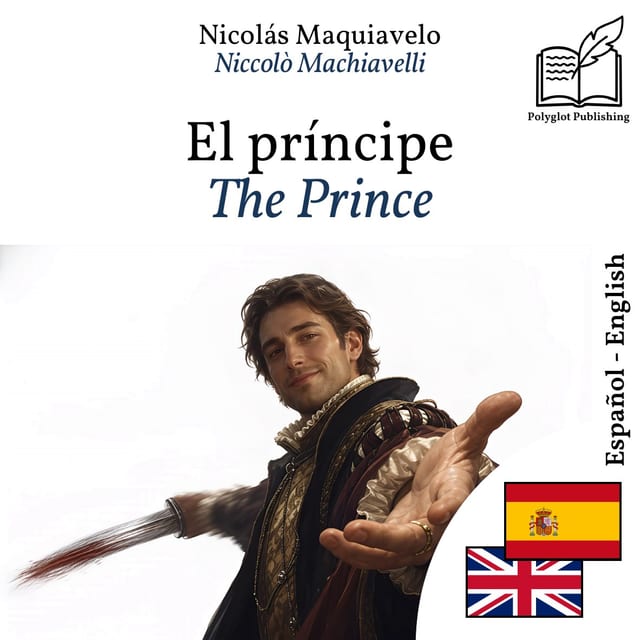
Niccolò Machiavelli
In the sixteenth century, Machiavelli, a Florentine diplomat pushed out of power, writes this little treatise to explain how a prince seizes power and, above all, how he keeps it. He draws on examples from antiquity and from the Italy of his day, and gives blunt advice: is it better to be feared or loved, to keep your word or to know how to lie? It shows how those who govern, lead or negotiate think: his lessons on power held true then and still do today. The book is so clear-sighted that it gave rise to a word: “Machiavellian”. With the translation always in front of you, you can read this great classic in the language you are learning.
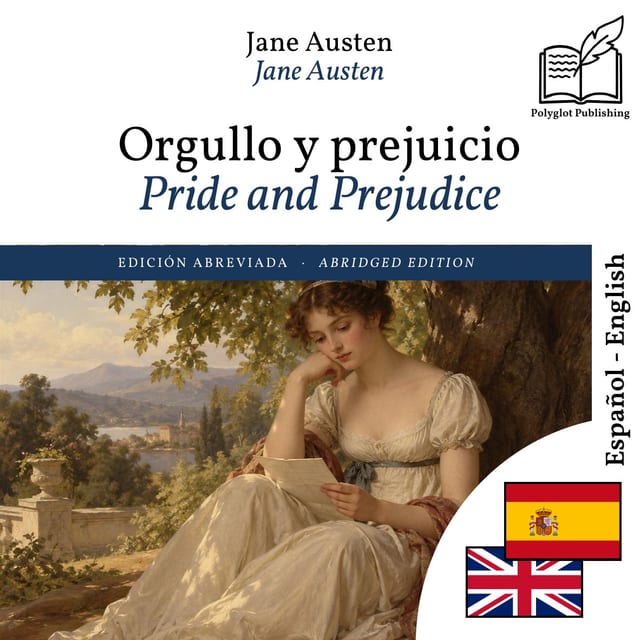
Jane Austen
In the English countryside, Mrs Bennet has only one idea: to marry off her five daughters. The arrival of Mr Bingley, a rich young man, in the neighbourhood delights her, but his friend Mr Darcy is cold and proud from the very first ball. Elizabeth, the second of the sisters, lively and teasing, takes an instant dislike to him. Its witty exchanges and amused eye on families and marriages make it one of the best loved comedies in literature. With the translation always in front of you, Jane Austen's elegant, ironic style is a pleasure to read in the language you are learning.
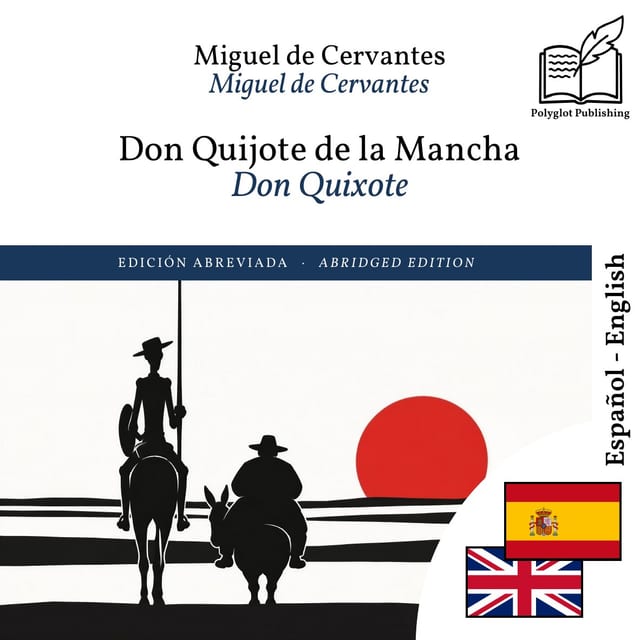
Miguel de Cervantes
A gentleman of La Mancha has read so many tales of chivalry that he loses his mind. Calling himself Don Quixote, he takes to the road on a thin old horse, with Sancho Panza, a talkative peasant full of common sense, to whom he has promised an island. The knight mistakes inns for castles and windmills for giants. Funny and moving at once, this novel gave the whole world a famous image: tilting at windmills. It is often called the first modern novel. With the translation always in front of you, you can read this great classic in the language you are learning.

Charles Dickens
On Christmas Eve, Ebenezer Scrooge, an old miser who hates the festive season, is visited by the ghost of his former partner, chained for all eternity. Then three spirits come for him, one after another, to show him his past, his present and his future. Dickens turns a ghost story into a warm fable about generosity and the possibility of change. This tale did a great deal to shape the spirit of Christmas as we still celebrate it today. Full of life and humour, this short tale is easy to read in the language you are learning, and ideal for a winter's evening.

Alexandre Dumas
In 1625, young d'Artagnan leaves his native Gascony for Paris, with a ridiculous horse and a letter for the captain of the King's Musketeers. On his very first day he challenges three musketeers, Athos, Porthos and Aramis, to duels, and they become his friends for life. Together they defend the queen against Cardinal Richelieu and the formidable Milady. Duels, wild rides and plots: the great swashbuckling novel, and one of the finest stories of friendship in literature. Full of humour, action and lively dialogue, it is easy to read in the language you are learning.
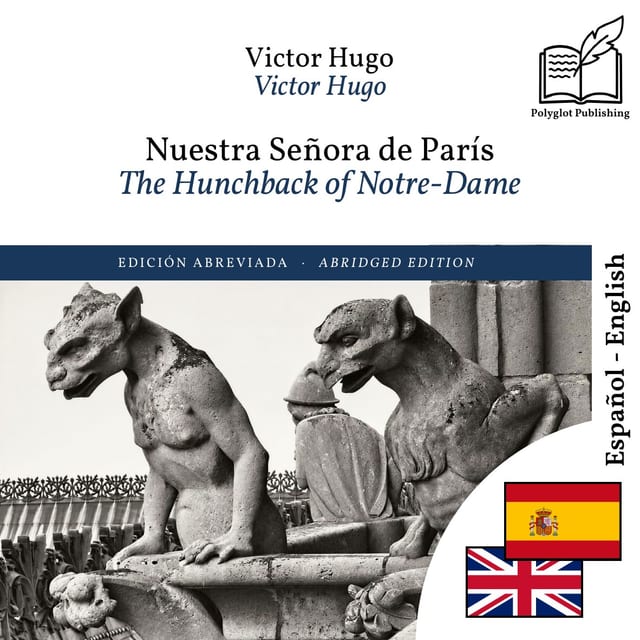
Victor Hugo
Paris, 1482: during the Feast of Fools, the beautiful Esmeralda dances in the Place de Grève. Quasimodo, the cathedral's hunchbacked bell-ringer, and the archdeacon Claude Frollo, who brought him up, are both overwhelmed by her. From the Court of Miracles to the pillory, the young woman becomes the object of dangerous passions. Hugo brings medieval Paris back to life around the cathedral. The novel made Quasimodo one of the most famous characters in literature, and helped to save the cathedral, which was then badly run down. With the translation always in front of you, you can read this great novel by Victor Hugo in the language you are learning.

Leo Tolstoy
In 1805, in the salons of St Petersburg, everyone is talking about Napoleon. Pierre Bezukhov, an awkward young man who is about to inherit a huge fortune, is looking for meaning in his life. His friend, Prince Andrei Bolkonsky, goes off to war to escape boredom, while young Natasha Rostova is bursting with joie de vivre. From Austerlitz to the burning of Moscow, Tolstoy weaves together great battles and family life, love and war. We watch his characters grow up, love, make mistakes and change, like people we know. With the translation always in front of you, you can read this great novel in the language you are learning.
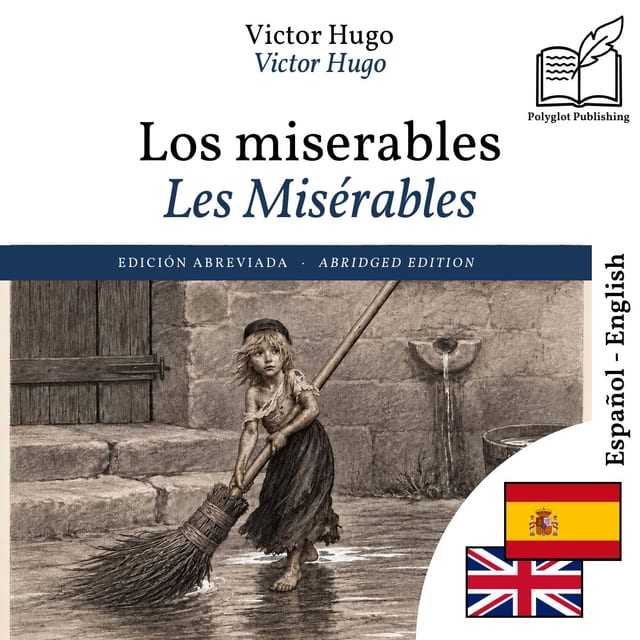
Victor Hugo
Released after nineteen years in prison with hard labour for stealing a loaf of bread, Jean Valjean is turned away everywhere, until the evening a bishop takes him in. Now a changed man living under a false name, he takes in little Cosette, mistreated by the Thénardiers, and brings her up in hiding. Inspector Javert, for his part, does not believe a convict can change. Around them, Victor Hugo brings a whole century back to life, right up to the barricades of Paris. One of his characters even became a word in French: a cheeky Paris street urchin is still called a “gavroche”. With the translation always in front of you, you can read this great classic in the language you are learning.

Karl Marx, Friedrich Engels
In 1848, on the eve of the revolutions, Marx and Engels publish this short text, which opens with a famous line: “A spectre is haunting Europe: the spectre of communism.” They describe history as a struggle between classes, trace the rise of the bourgeoisie and call on workers to unite. Whether or not you share its ideas, few texts have changed the world so much. Its last line, “Workers of the world, unite!”, is known everywhere, and reading it helps you understand a large part of the twentieth century. Written as a call to action, and with the translation always in front of you, it can be read in one sitting in the language you are learning.
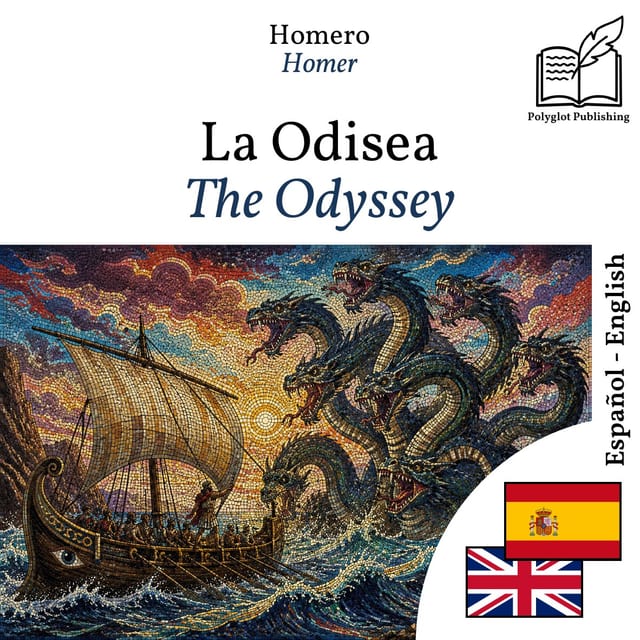
Homer
After the Trojan War, Odysseus wants to return home to his island of Ithaca. But it will take him ten years of wandering: he faces the Cyclops, escapes the song of the Sirens and resists the charms of the enchantress Circe. Meanwhile, his wife Penelope fends off the suitors who have overrun her palace. It is the greatest adventure in literature, so much so that its title has become a word: an odyssey. With the translation always in front of you, you can read this great tale in the language you are learning.
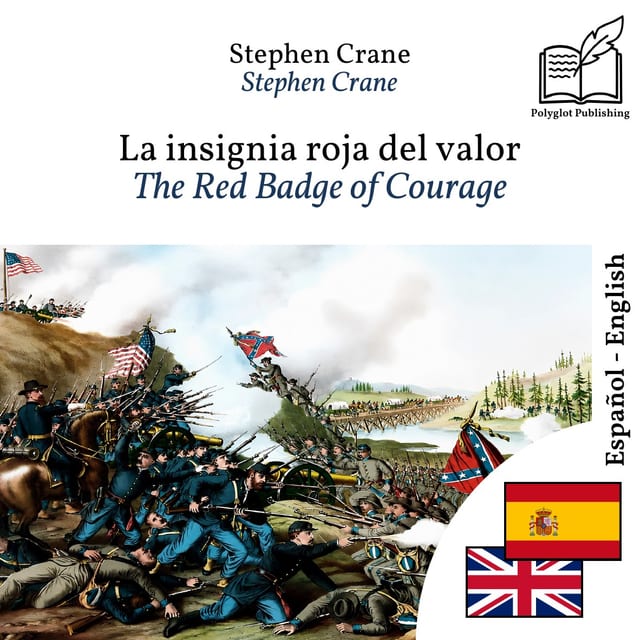
Stephen Crane
During the American Civil War, Henry Fleming, a young farmer, joins the Union army dreaming of glory. For weeks he waits for his first battle and wonders whether he will stand firm or run away. When the battle finally comes, the smoke, the noise and the fear sweep away all his ideas about heroism. Stephen Crane, born after the war, had never seen it, and yet many readers took him for an old soldier. This short novel tells the battle from the inside, as close as possible to what a frightened man feels. Its clear sentences and vivid scenes make it enjoyable to read in the language you are learning.

Émile Zola
Out of work, Étienne Lantier arrives one March night at Le Voreux, a mine in the north of France, and gets taken on in the miner Maheu's team. Down the mine, he discovers the heat, the danger and the hunger of the families, and he is far from indifferent to Catherine, Maheu's daughter. Outraged, Étienne leads the miners into a great strike against the Company. The title recalls the spring month when seeds germinate, like the hope of a fairer world. With the translation always in front of you, you can read this great novel by Zola in the language you are learning.
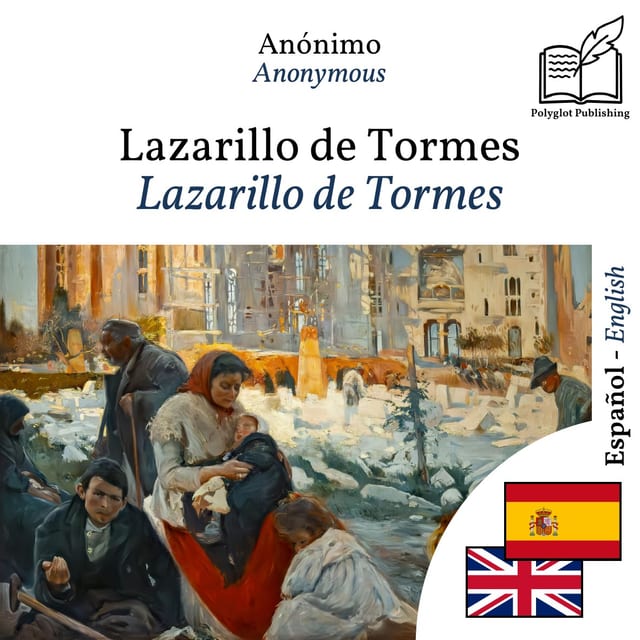
Anonymous
Born on the banks of the Tormes into a wretched family, little Lázaro becomes the guide of a blind beggar, his first master. So as not to starve, he learns to steal from him: he drinks his wine through a straw and makes off with his sausage. He then serves a miserly priest, then a ruined squire who hides his poverty behind his fine clothes. Published without the author's name in 1554, then banned by the Inquisition, this short tale full of cunning and dark humour is the very first picaresque novel. Lázaro tells his own adventures mischievously, and the short chapters are easy to read in the language you are learning.

Anton Chekhov
After years in Paris, Lyubov Ranevskaya returns to her country estate, which is riddled with debt. A decision must be made about the cherry orchard, the garden of her childhood. Around her gather her brother, her daughters, the old manservant, an eternal student and a merchant whose father was a serf of the family. It is Chekhov's last play, which he himself called a comedy: it blends laughter and melancholy in a gentle farewell to a world that is fading away. Written entirely in dialogue, this short play is easy to read in the language you are learning.

Molière
Harpagon, a rich bourgeois obsessed with his box full of gold, wants to marry his children to wealthy matches so as to spend nothing, and to marry young Mariane himself. But his son Cléante happens to love Mariane, his daughter Élise loves Valère, and a crafty valet has spotted the box. It is one of Molière's most famous comedies. Its hero has become a common noun in French, “un harpagon”, and his cry “Without a dowry!” has been making people laugh for more than three centuries. Written in lively dialogue and full of mix-ups, this play is easy to read in the language you are learning.
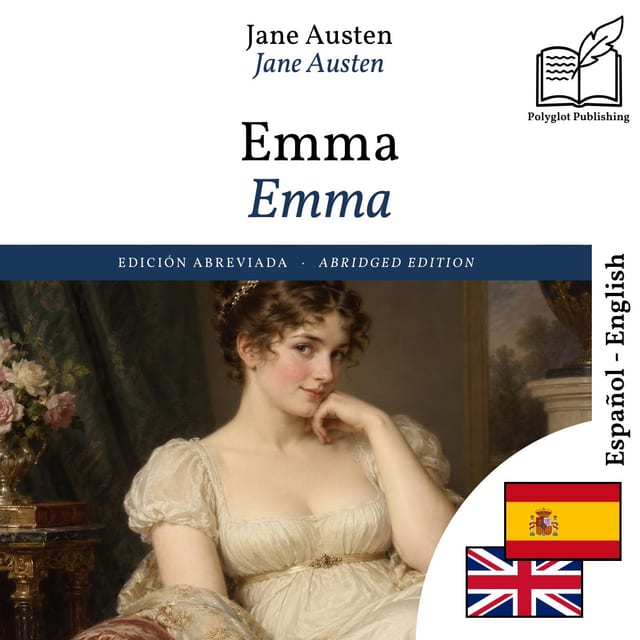
Jane Austen
In an English village, Emma Woodhouse, young, beautiful, rich and sure of herself, amuses herself by arranging other people's marriages. She takes under her wing Harriet, a young woman with no fortune, and decides to find her a husband in her own way. But Emma reads hearts badly, starting with her own. A comedy full of misunderstandings, in which Jane Austen gently mocks her heroine, and we laugh at her mistakes before recognising ourselves in them. Its witty dialogue is a pleasure to read in the language you are learning.
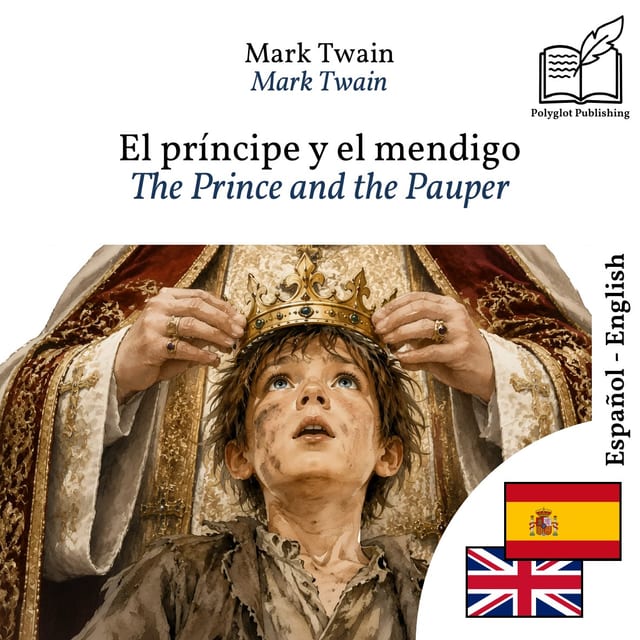
Mark Twain
In sixteenth-century London, Tom Canty, a poor boy whose father beats him, dreams of seeing a real prince. One day, at the palace gates, he is noticed by Prince Edward, son of King Henry VIII. The two boys look as alike as twins. For fun, they swap clothes, and the guards throw the real prince out into the street. Tom has to play the prince without knowing anything about the court, while Edward discovers hunger, thieves and the injustice of his own kingdom. An adventure full of humour, in which each boy learns about the other's life. Full of twists and turns, this classic is easy to read in the language you are learning.
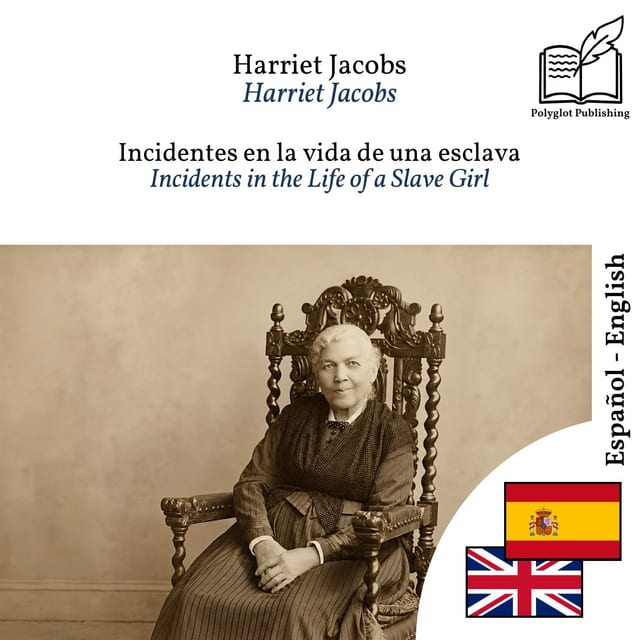
Harriet Jacobs
Harriet Jacobs is born a slave in North Carolina. As a teenager, she is pursued by her master's advances. To escape him and protect her children, she hides for seven years in a tiny attic at her grandmother's house, watching her children through a small hole, before she can flee to the North. It is one of the few slave narratives written by a woman. In it she says what others kept silent: what slavery did to women and mothers. She tells her life simply, like a confidence, and her story is a moving read in the language you are learning.

Homer
In the tenth year of the Trojan War, King Agamemnon takes from Achilles the captive woman who was his prize. Furious, the greatest warrior of the Greeks withdraws to his tent and refuses to fight. Without him, the Greek army falls back, and the Trojan Hector leads his men right up to the wall that protects the ships. The poem opens with the “wrath” of Achilles, and the whole story flows from it. It is the first great story of European literature, and some scenes, such as Hector's farewell to his wife Andromache, are still moving today. With the translation always in front of you, you can read this great poem in the language you are learning.

Stendhal
The son of a sawmill owner in the Jura, Julien Sorel is poor, proud and ambitious, and secretly admires Napoleon. Taken on as tutor in the household of the mayor of Verrières, he seduces his wife, Madame de Rênal. Then, from the seminary in Besançon to the Paris mansion of the Marquis de La Mole, he climbs through a society that despises him. It is Stendhal's great novel of ambition and love. Julien, alone against a whole society, is one of the most fascinating heroes in literature. With the translation always in front of you, you can read this masterpiece in the language you are learning.
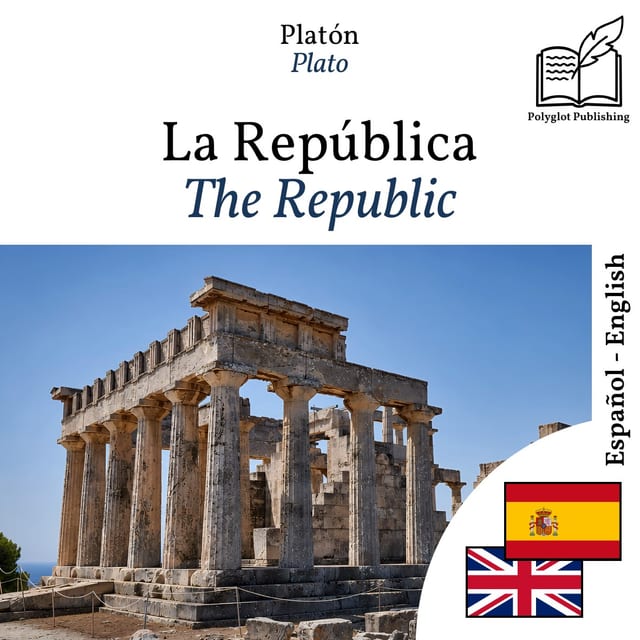
Plato
On a feast day at Piraeus, the port of Athens, Socrates and his friends ask what justice is, and whether the just man is happier than the unjust one. To answer, Socrates imagines an ideal city ruled by philosophers. This is where he tells the famous allegory of the cave: chained prisoners take shadows on a wall for reality. For more than two thousand years, this book has fed debates on power, education and truth. It still helps us ask who should govern, and why. With the translation always in front of you, you can read this great dialogue in the language you are learning.

Ernest Hemingway
During the First World War, Frederic Henry, a young American, drives ambulances for the Italian army on the mountain front. There he meets Catherine Barkley, an English nurse. Wounded, he is treated in a hospital in Milan, and their affair becomes a great love. Hemingway had himself driven ambulances on that front, been wounded and loved a nurse. He tells of war without heroics, and of a love that tries to escape the war. Its short, simple sentences and plentiful dialogue make it easy to read in the language you are learning.

Abbé Prévost
At seventeen, the Chevalier des Grieux, a young man from a good family, meets the beautiful Manon Lescaut in Amiens, as she is being taken to a convent. He runs off with her at once and gives up everything for her: his family, his fortune, his honour. Through escapes, cheating at cards and spells in prison, he will follow her all the way to Louisiana. Manon loves des Grieux, but she also loves luxury, and that is her whole mystery: you never know whether she will betray him or follow him. Published in 1731, it remains one of the finest stories of passion in literature. Told by des Grieux himself, it can be read in one sitting in the language you are learning.