Henry David Thoreau
Walden: what to read next?
Books close in genre, era, author or reading level, to read in bilingual editions.

 Fyodor DostoevskyThe Brothers KaramazovFyodor Karamazov, a miserly and dissolute father, quarrels with his eldest son Dmitri over money and over the same woman. His two other sons take opposite paths: Ivan, tormented by the existence of evil, and gentle Alyosha, a novice in a monastery.Same genreSame era · 1880
 Honoré de BalzacThe Wild Ass's SkinRuined and determined to die, young Raphaël de Valentin walks into an antique shop, where the dealer offers him an animal skin covered in signs. This talisman grants every wish of its owner, but it shrinks with each wish, and its owner's life grows shorter with it.Same genreSame era · 1831
 Fyodor DostoevskyNotes from Underground“I am a sick man… I am a spiteful man.” So begins the confession of a former minor civil servant, bitter and solitary, shut away in a corner of St Petersburg. First he explains, provocatively, why he rejects reason and progress.Same genreSame era · 1864
 ChateaubriandMemoirs from Beyond the Grave, Volume 4 (1815–1828)This fourth volume of the Memoirs from Beyond the Grave covers the years 1815 to 1828. Chateaubriand tells of the Hundred Days, which he spends in Ghent with King Louis XVIII, and of the Battle of Waterloo, which he hears thundering in the distance.Same genreSame era · 1848
 Herman MelvilleBartleby, the ScrivenerOn Wall Street, a lawyer takes on a new copyist, Bartleby, a pale, quiet young man who is very diligent at first. One day, when his employer asks him to check a copy with him, Bartleby simply replies: “I would prefer not to.” Then he gives the same answer to every request,…Same country · United StatesSame genreSame era · 1853
 Friedrich NietzscheThus Spoke ZarathustraAfter ten years alone in the mountains, the sage Zarathustra comes down among men to bring them news: “God is dead”. He urges them to stop following the values they have been taught, and to create their own. This book brought the idea of the Übermensch into our culture.Same genreSame era · 1883
 Alphonse DaudetLetters from My WindmillSettled in an old windmill in Provence, Daudet writes to his Parisian readers with stories from the region. We meet Monsieur Seguin's goat, who dreams of freedom in the mountains, the priest of Cucugnan, who makes his parishioners tremble with a sermon about hell, and Father…Same genreSame era · 1869
 Emma GoldmanAnarchism and Other EssaysAt the start of the twentieth century, Emma Goldman, who came from Russia to the United States at sixteen, travels the country defending anarchism, the dream of a society without masters.Same country · United StatesSame genre
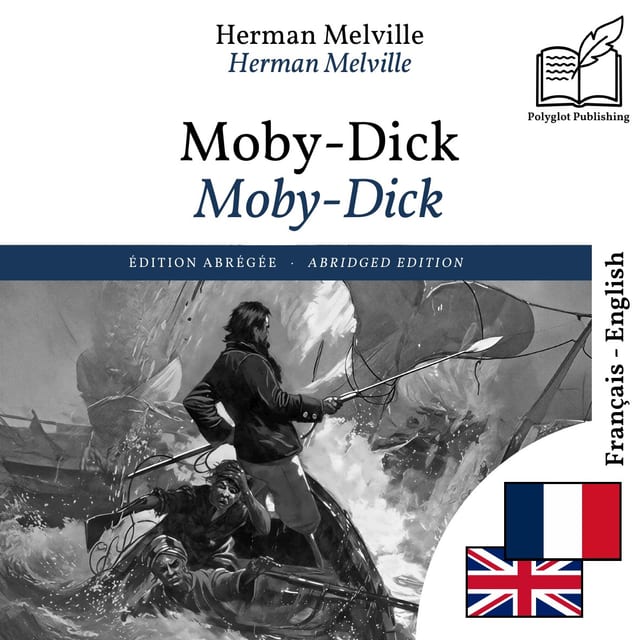 Herman MelvilleMoby-DickIshmael, a young sailor, signs on at Nantucket aboard the Pequod, a whaler commanded by Captain Ahab. Ahab lost a leg to a white sperm whale, Moby Dick, and has only one idea left: to find it and kill it.Same country · United StatesSame genreSame era · 1851
 John Stuart MillOn LibertyIn 1859, the philosopher John Stuart Mill asks a simple question: how far does society have the right to control an individual? His answer comes down to one principle: everyone should be able to think, speak and live as they wish, so long as they do no harm to others.Same genreSame era · 1859
 Karl Marx, Friedrich EngelsThe Communist ManifestoIn 1848, on the eve of the revolutions, Marx and Engels publish this short text, which opens with a famous line: “A spectre is haunting Europe: the spectre of communism.” They describe history as a struggle between classes, trace the rise of the bourgeoisie and call on workers…Same genreSame era · 1848
 Elizabeth GaskellCranfordIn Cranford, a small country town, almost every house is kept by ladies, often poor, who never talk about money. The narrator, Mary Smith, spends long stays there with Miss Matty, the shy and very kind daughter of the late rector.Same genreSame era · 1853