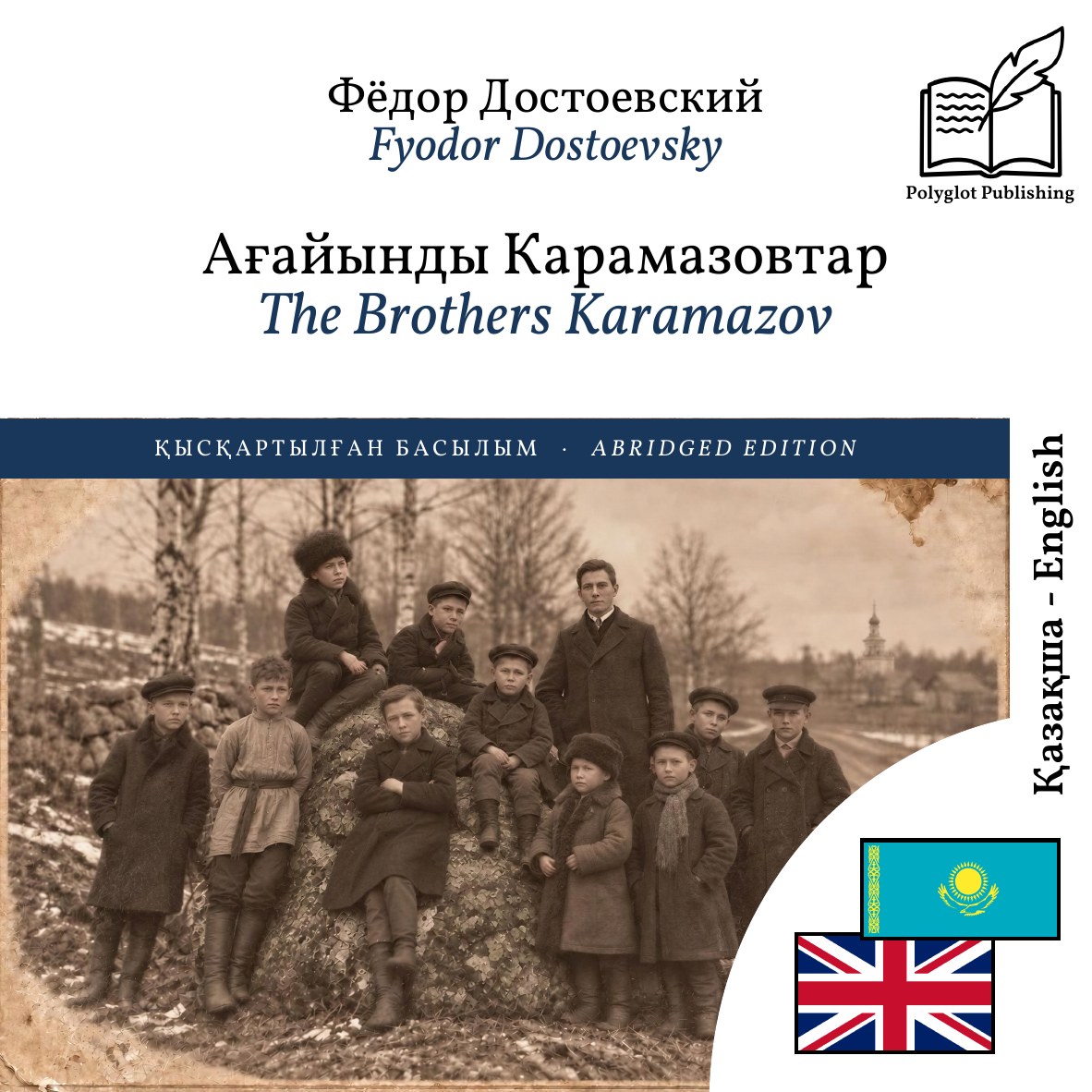
Fjodor Dostojevskij
Bröderna Karamazov
Tryckt bok: 39,99 €
Digital: 15,99 €
- Originalutgåva
- 1880
- Sidor
- 439
- Svårighetsgrad
- ★★★
- Genrer
- Filosofi, Psykologi
- Översatt från
- ryska
Sammanfattning av boken
Utdrag
Varje stycke på språket du lär dig, med översättningen direkt under.
[Федор Павлович Карамазов, ұсақ помещик, сайқымазақ әрі сұмпайы сұғанақ, екі рет үйленіп, ұлдарының бәрін тағдырдың тәлкегіне тастап кеткен. Үлкені Дмитрийді, тұңғыш әйелінен туған ұлын, малай Григорий мен шешесінің туыстары өсірді; екінші әйелінен туған Иван мен Алексей бөгде жандардың қолында ержетті. Талай жылдан кейін үшеуі туған қалаға жиналады.]
[Fyodor Pavlovich Karamazov, a petty landowner, a buffoon and a sensualist, was twice married and abandoned all his sons to the mercy of fate. The eldest, Dmitri, the son of his first wife, was brought up by the servant Grigory and by his mother’s relations; Ivan and Alexei, the sons of his second wife, grew up among strangers who took them in out of charity. Many years later all three come together in their native town.]
IV. Үшінші ұл Алёша
IV. The Third Son, Alyosha
Ол кезде оның жасы небәрі жиырмада еді (ағасы Иван жиырма төртке қараған, ал үлкен ағалары Дмитрий жиырма сегізге шыққан). Ең алдымен айтарым: бұл жас жігіт, Алёша, мүлде фанатик емес-ті, меніңше, ең құрығанда мистик те емес-ті. Толық пікірімді алдын ала айтайын: ол жай ғана ерте пісіп жетілген адамсүйгіш жан еді, ал монастырь жолына түсуінің себебі — сол шақта осы жол ғана оны таңғалдырып, жанының қараңғылықтан, дүниенің қаһарынан жарық махаббатқа ұмтылысына, айталық, шығар жолдың мұратын көрсеткені болатын. Ал бұл жол оны тек сонда өзінің пікірінше ерекше жаратылысты — біздің атақты монастырь стареці Зосиманы кездестіргені үшін ғана баурап алды, оған ол қанағат таппайтын жүрегінің ыстық әрі алғашқы махаббатымен байланып қалды. Әйтсе де, сол кезде-ақ оның тым оғаш болғанын, тіпті бесіктен бастап-ақ солай болғанын жоққа шығармаймын. Айтпақшы, мен ол туралы бір айтқанмын: шешесінен төртінші жасында ғана айырылса да, оны өмір бойы есінде сақтап қалған, шешесінің жүзін, еркелетуін, «нақ тірідей менің алдымда тұрғандай». Мұндай естеліктер (мұны бәрі біледі) одан да ертерек жастан, тіпті екі жастан да есте қалуы мүмкін, бірақ олар өмір бойы қараңғылықтан жарқыраған нүктелердей, әйтпесе бүтіндей өшіп, жоғалып кеткен алып суреттің жұлынып алынған бір бұрышындай болып қана қалқып шығады. Дәл солай болды ол да: ол бір кешті есінде сақтап қалды, жазғы, тынық кеш, ашық терезе, батып бара жатқан күннің қиғаш сәулелері (әсіресе сол қиғаш сәулелер есінде қалды), бөлменің бұрышындағы қасиетті сурет, оның алдында жанып тұрған шам, ал сурет алдында тізерлеп, истерикадағыдай өксіп, шыңғырып та, айқайлап та жылап отырған анасы, оны екі қолымен қапсыра ұстап, ауыртқандай қатты құшақтап, құдай анасынан ол үшін жалбарынып, оны құшағынан суырып, екі қолымен қасиетті суретке қарай, құдай анасының қорғауына табыстағандай созып тұр… кенет күтуші жүгіріп кіріп, оны шошып, шешесінің қолынан жұлып алады. Міне, сурет! Алёша сол сәтте анасының жүзін де есінде сақтап қалды: есіне түсіргенінше, оның жүзі жынданғандай, әйтсе де ғажап сұлу болды деп айтатын. Бірақ ол бұл естелігін біреуге сирек сеніп айтатын. Балалық пен жастық шағында ол ашылып сөйлемейтін, тіпті сөзге де сараң еді, бірақ бұл сенімсіздіктен емес, именшектіктен немесе тұнжыр томаға-тұйықтықтан да емес, тіпті керісінше, басқа бір нәрседен, іштей бір уайымнан, тек өзіне ғана қатысты, өзгеге ешқандай қатысы жоқ, әйтсе де ол үшін сонша маңызды бір нәрседен еді, сондықтан ол оның кесірінен өзгелерді ұмытып та қалатын. Бірақ ол адамдарды сүйетін: ол, шамасы, өмір бойы адамдарға толық сеніп өткен сияқты, әйтсе де оны ешкім ешқашан аңқау деп те, аңғал адам деп те санаған емес. Оның бойында бір нәрсе бар еді, ол өзгелерге (кейін өмір бойы да) оның адамдарға төреші болғысы келмейтінін, айыптаушылық жүгін көтергісі келмейтінін, ешқашан ешкімді айыптамайтынын аңғартып, ұқтырып тұратын. Тіпті ол бәрін де, жұрдай айыптамай, қабылдайтын сияқты көрінетін, әйткенмен жиі қатты қамығатын. Сонымен қоймай, ол бұл ретте өзін ешкім таңғалдыра да, шошыта да алмайтын дәрежеге жетті, әрі мұнысы ең ерте жастық шағында-ақ солай еді. Жиырмаға толғанда әкесіне келгенде, тікелей айтқанда лас бұзақылықтың ұясына келгенде, ол, пәк әрі таза жан, қарауға шыдам жетпегенде тек үнсіз шығып кететін, ешкімге де қаперінде менсінбеушілік немесе айыптау көлеңкесін білдірмей. Ал әкесі, бір кездері біреудің қолында күн кешкен, сондықтан да кемсітуге жаны сезімтал әрі нәзік адам, әуелде оны сенімсіздікпен, тұнжырап қарсы алса да («тым үнсіз, ішінен көп ойлайды-ау» деп), көп ұзамай, әрі кетсе екі-ақ аптадан соң, оны сұмдық жиі құшақтап, сүйетін болып алды, рас, мас күйіндегі көз жасымен, ішкіліктің шерімен, бірақ оны шын жүректен, тереңнен сүйіп қалғаны көрініп тұратын, әрине, ондай кісінің ешкімді бұлайша сүйгені бұрын-соңды болмаған да шығар…
He was only twenty at the time (his brother Ivan was then in his twenty-fourth year, and their eldest brother, Dmitri, in his twenty-eighth). First of all I declare that this youth, Alyosha, was by no means a fanatic, and, to my mind at least, not even in the least a mystic. I will state my full opinion beforehand: he was simply an early lover of mankind, and if he took to the monastic road, it was only because at that time it alone struck him and presented to him, so to speak, the ideal way out for his soul, which was straining out of the darkness of worldly malice towards the light of love. And that road struck him only because upon it he then met an extraordinary being, as he considered — our famous monastery elder Zosima, to whom he became attached with all the ardent first love of his unquenchable heart. Nevertheless, I do not dispute that he was even then already very strange, having been so from the very cradle. I have already mentioned of him, by the way, that, though he was left motherless in only his fourth year, he remembered her afterwards all his life, her face, her caresses, “exactly as though she were standing alive before me.” Such memories may be retained (as everyone knows) even from a still earlier age, even from the age of two, but they only emerge throughout one’s whole life like bright points out of the darkness, like a corner torn from an enormous picture which has all gone out and vanished, save for that one little corner. So it was precisely with him: he remembered one evening, a summer evening, still, the window open, the slanting rays of the setting sun (it was the slanting rays he remembered most of all), an ikon in the corner of the room, a lighted lamp before it, and before the ikon, on her knees, his mother, sobbing as though in hysterics, with shrieks and cries, who had seized him in both her arms, embracing him so tightly that it hurt, praying for him to the Mother of God and holding him out from her embrace with both hands towards the ikon, as though beneath the Mother of God’s protection… and suddenly the nurse runs in and snatches him from her in terror. What a picture! Alyosha remembered his mother’s face too at that moment: he used to say that it was frenzied, but beautiful, so far as he could recall it. But he rarely cared to confide this memory to anyone. In childhood and youth he was little given to expansiveness, and even little given to talk, yet not from mistrust, not from shyness or sullen unsociability — quite the contrary, indeed — but from something else, from a kind of inward preoccupation, strictly personal, which concerned no one else, but was so important to him that because of it he seemed to forget others. But he loved people: all his life, it seemed, he lived in complete faith in people, and yet no one ever thought him either a simpleton or a naïve man. There was something in him which told one, and impressed upon one (and did so all his life afterwards), that he did not wish to be a judge of men, that he would not take censure upon himself and would not condemn anyone for anything. It even seemed that he allowed everything, without condemning in the least, though often grieving very bitterly. More than that: in this respect he went so far that no one could either surprise him or frighten him, and this even in his earliest youth. Arriving in his twentieth year at his father’s, positively into a den of filthy debauchery, he, chaste and pure, would merely withdraw in silence when it was unbearable to look on, yet without the slightest air of contempt or condemnation towards anyone whatsoever. His father, who had once been a hanger-on and was therefore quick and delicate in sensing offence, at first met him mistrustfully and sullenly (“he is very silent, they say, and reasons a great deal to himself”), but soon ended, however, by embracing and kissing him terribly often, within no more than a couple of weeks — with drunken tears, it is true, and in maudlin sentimentality, but plainly having come to love him sincerely and deeply, and in a way such a man as he had, of course, never managed to love anyone…
Handlingen

Bokens värld

Författaren

Fördelarna med den tvåspråkiga metoden i visningsläget Rad för rad synkroniserad
Varje rad i originalet har sin översättning direkt under sig, på samma höjd. Du behöver aldrig leta efter var du befinner dig: blicken flyttar sig ett steg ner och hittar exakt den mening du just läst. Det är uppställningen som låter dig ge dig i kast med en bok på ett språk du knappt behärskar utan att tappa tråden, och jämföra de två texterna nästan ord för ord.
Liknande böcker
Brott och straff
Fjodor Dostojevskij

Mrs Dalloway
Virginia Woolf
Processen
Franz Kafka

Dorian Grays porträtt
Oscar Wilde
Bartleby, skrivaren
Herman Melville
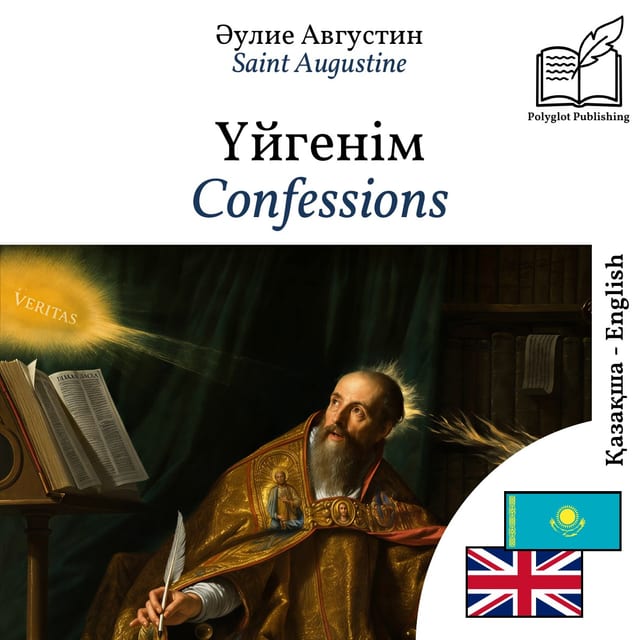
Bekännelser
Sankt Augustinus
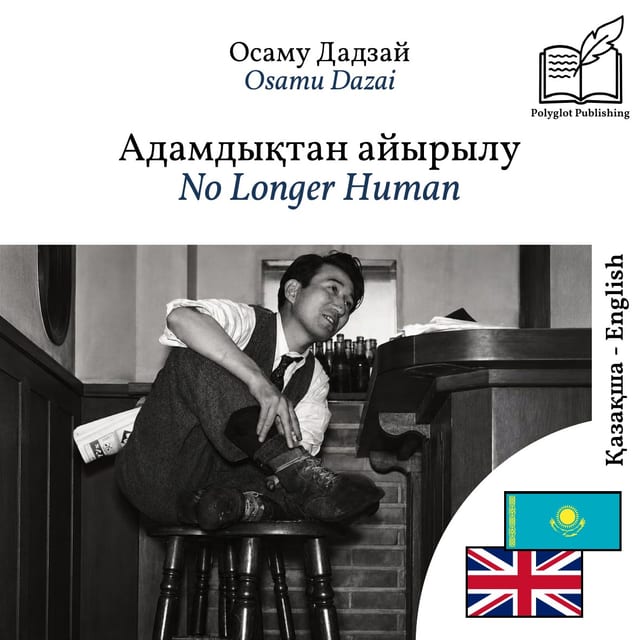
En mans förfall
Osamu Dazai
Bortom gott och ont
Friedrich Nietzsche
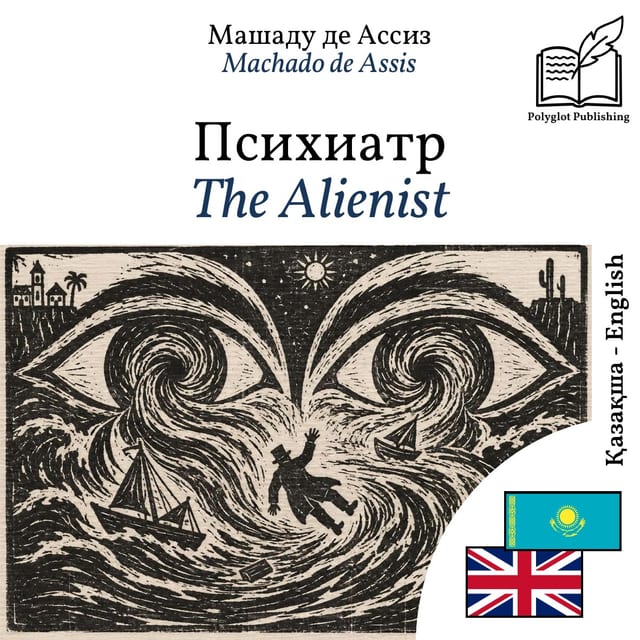
Alienisten
Machado de Assis
Konstnärens porträtt
James Joyce
Robert Orange
John Oliver Hobbes
Anarkism och andra essäer
Emma Goldman

Chagrängskinnet
Honoré de Balzac
Walden
Henry Thoreau
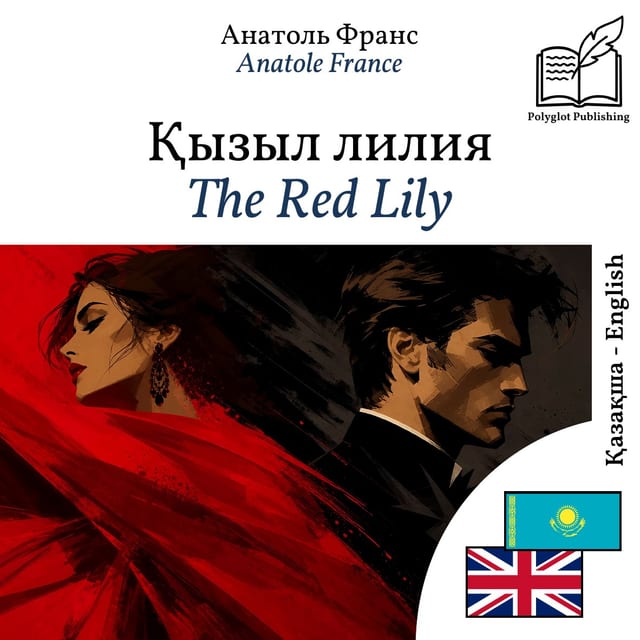
Den röda liljan
Anatole France
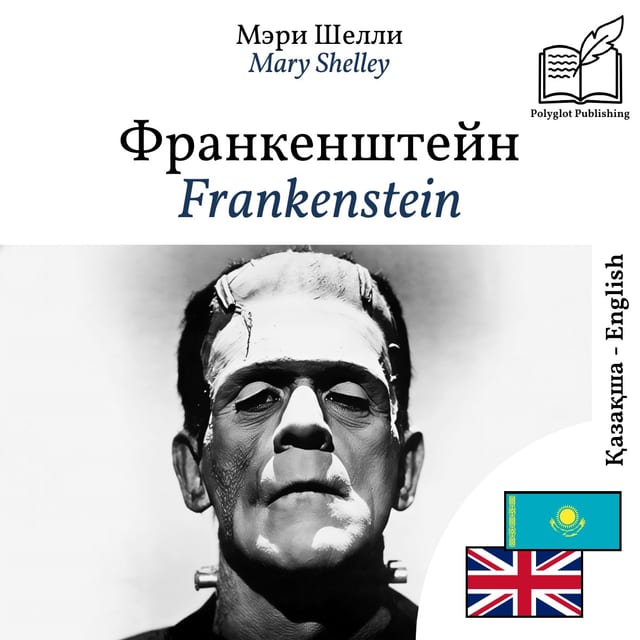
Frankenstein
Mary Shelley
Utforska webbplatsen
Andra språk du kan lära dig
- engelska
- franska
- spanska
- tyska
- italienska
- ryska
- arabiska
- bulgariska
- bengali
- katalanska
- tjeckiska
- danska
- grekiska
- esperanto
- estniska
- persiska
- finska
- hebreiska
- hindi
- kroatiska
- ungerska
- indonesiska
- japanska
- kazakiska
- koreanska
- litauiska
- lettiska
- nederländska
- norska
- polska
- portugisiska
- brasiliansk portugisiska
- rumänska
- serbiska (latinska)
- serbiska (kyrilliska)
- slovakiska
- slovenska
- swahili
- turkiska
- ukrainska
- vietnamesiska
- kinesiska
- kinesiska (Taiwan)