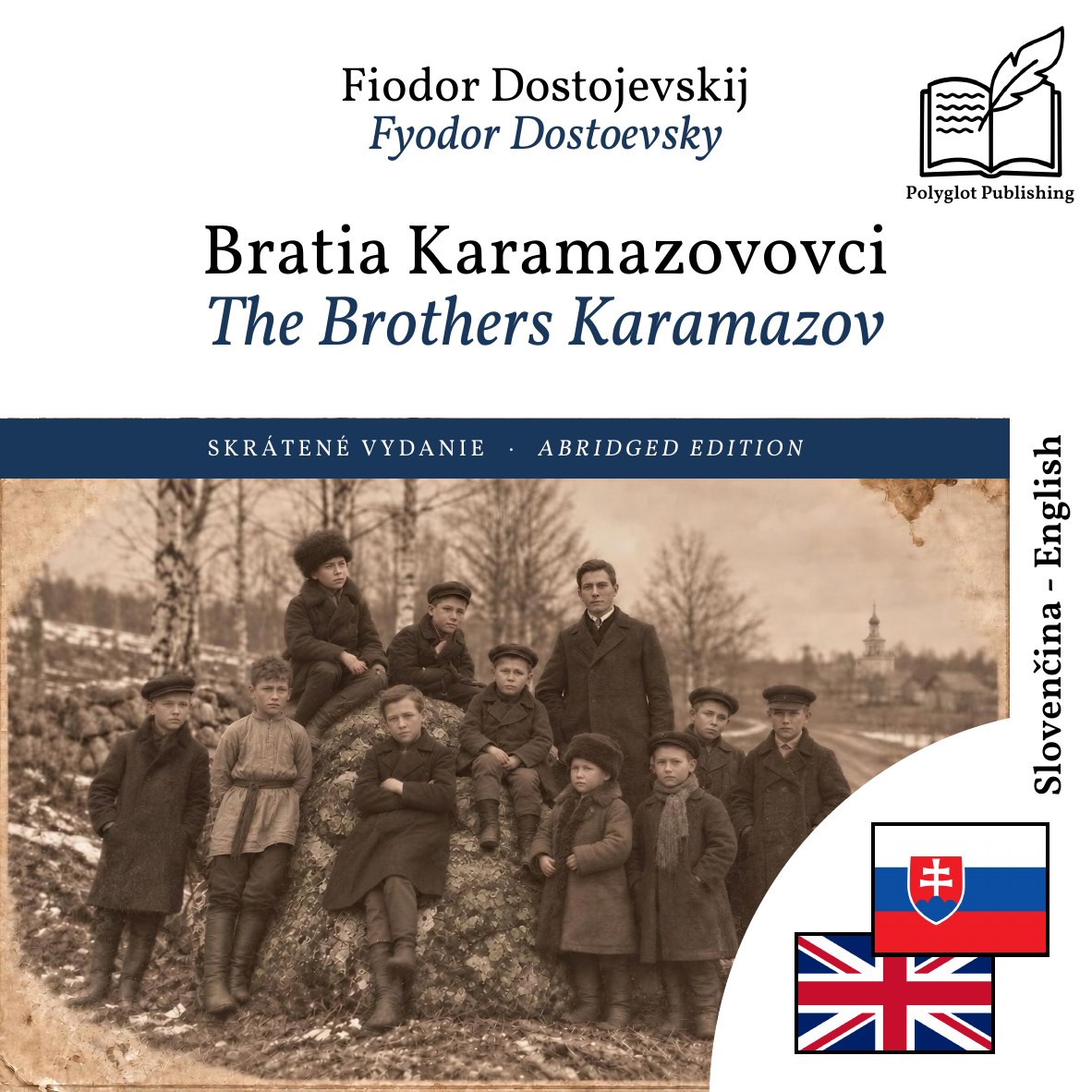
Fjodor Dostojevskij
Bröderna Karamazov
Tryckt bok: 39,99 €
Digital: 15,99 €
- Originalutgåva
- 1880
- Sidor
- 439
- Svårighetsgrad
- ★★★
- Genrer
- Filosofi, Psykologi
- Översatt från
- ryska
Sammanfattning av boken
Utdrag
Varje stycke på språket du lär dig, med översättningen direkt under.
[Fiodor Pavlovič Karamazov, malý statkár, šašo a pôžitkár, bol dvakrát ženatý a všetkých svojich synov nechal na vôľu osudu. Najstaršieho, Dmitrija, syna z prvej ženy, vychovávali sluha Grigorij a matkini príbuzní; Ivan a Alexej, synovia z druhej ženy, vyrástli u cudzích dobrodincov. Po mnohých rokoch sa všetci traja zídu v rodnom meste.]
[Fyodor Pavlovich Karamazov, a petty landowner, a buffoon and a sensualist, was twice married and abandoned all his sons to the mercy of fate. The eldest, Dmitri, the son of his first wife, was brought up by the servant Grigory and by his mother’s relations; Ivan and Alexei, the sons of his second wife, grew up among strangers who took them in out of charity. Many years later all three come together in their native town.]
IV. Tretí syn Aľoša
IV. The Third Son, Alyosha
Mal vtedy iba dvadsať rokov (jeho bratovi Ivanovi šiel vtedy dvadsiaty štvrtý a ich najstaršiemu bratovi Dmitrijovi dvadsiaty ôsmy). Predovšetkým vyhlasujem, že tento mladík, Aľoša, nebol vôbec fanatik a podľa mňa aspoň ani len mystik nie. Vopred vyslovím svoj plný názor: bol to prosto skorý ľudomil, a ak sa vrhol na kláštornú cestu, tak len preto, že v tom čase jedine ona ho ohromila a poskytla mu, takpovediac, ideál východiska pre jeho dušu, ktorá sa trhala z temna svetskej zloby k svetlu lásky. A ohromila ho táto cesta iba preto, že na nej vtedy stretol bytosť, podľa jeho názoru neobyčajnú — nášho slávneho kláštorného starca Zosimu, ku ktorému sa pripútal všetkou horúcou prvou láskou svojho neukojiteľného srdca. Nepopieram však, že aj vtedy už bol veľmi zvláštny, a to hneď od kolísky. Mimochodom, už som o ňom zmienil, že keď mu matka zomrela, keď mal iba štyri roky, zapamätal si ju potom na celý život, jej tvár, jej pohladenia, „akoby stála predo mnou živá“. Takéto vzpomienky sa môžu vryť (a to je všeobecne známe) aj z ešte ranejšieho veku, hoci z dvoch rokov, no vystupujú celý život akoby svetlými bodmi z temnoty, akoby vytrhnutým kútikom z ohromného obrazu, ktorý celý pohasol a zmizol, okrem tohto jediného kútika. Presne tak to bolo aj s ním: zapamätal si jeden večer, letný, tichý, otvorené okno, kosé lúče zapadajúceho slnka (práve tie kosé lúče si zapamätal najviac), v izbe v kúte ikonu, pred ňou zažatú lampku a pred ikonou na kolenách svoju matku, ako vzlyká akoby v hystérii, s vypískaním a výkrikmi, ako ho chytila do oboch rúk, objala ho pevne až do bolesti a modlila sa za neho k bohorodičke, vystierajúc ho zo svojho objatia oboma rukami k ikone akoby pod ochranu bohorodičky… a zrazu vbehne pestúnka a v zdesení mu ho vytrhne. Hľa, aký obraz! Aľoša si zapamätal v tom okamihu aj tvár svojej matky: hovoril, že bola zmätená vytržením, no krásna, nakoľko sa to dalo posúdiť podľa toho, čo si vedel pripomenúť. No zriedka komu rád zverieval túto vzpomienku. V detstve a mladosti bol málo expanzívny a aj málo hovorný, no nie z nedôvery, nie z bojazlivosti či pochmúrnej nespoločenskosti, práve naopak, ale z niečoho iného, z akejsi akoby vnútornej starosti, vlastne osobnej, ktorá sa iných netýkala, no bola pre neho taká dôležitá, že pre ňu akoby zabúdal na iných. Ale ľudí ľúbil: zdalo sa, že celý život žil, úplne veriac v ľudí, a pritom ho nikdy nikto nepokladal ani za prosťáčka, ani za naivného človeka. Bolo v ňom niečo, čo hovorilo a vnukalo (a tak aj celý ďalší život), že nechce byť sudcom ľudí, že nechce vziať na seba odsudzovanie a za nič nikoho neodsúdi. Zdalo sa dokonca, že všetko pripúšťa a ani trochu neodsudzuje, hoci sa často veľmi horko rmútil. Nielen to, v tomto smere došiel tak ďaleko, že ho nikto nedokázal ani prekvapiť, ani vydesiť, a to už v najranejšej mladosti. Keď prišiel v dvadsiatom roku k otcovi, priamo do brlohu špinavej neviazanosti, on, cudný a čistý, sa len mlčky vzďaľoval, keď bolo neznesiteľné hľadieť, no bez najmenšieho zdania pohŕdania či odsudzovania hoci kohokoľvek. Otec, ktorý bol kedysi príživníkom u cudzích, a teda človek vnímavý a chúlostivý na urážku, ho spočiatku prijal nedôverčivo a mrzuto („veľa, vraj, mlčí a veľa si o sebe myslí“), no skončilo to tým, že ho začal strašne často objímať a bozkávať, nie neskôr ako po nejakých dvoch týždňoch, pravda, s opitými slzami, v podguráženej precitlivelosti, no bolo vidieť, že si ho zaľúbil úprimne a hlboko, a to tak, ako sa takému, ako bol on, pravdaže, nikdy nepodarilo ľúbiť nikoho…
He was only twenty at the time (his brother Ivan was then in his twenty-fourth year, and their eldest brother, Dmitri, in his twenty-eighth). First of all I declare that this youth, Alyosha, was by no means a fanatic, and, to my mind at least, not even in the least a mystic. I will state my full opinion beforehand: he was simply an early lover of mankind, and if he took to the monastic road, it was only because at that time it alone struck him and presented to him, so to speak, the ideal way out for his soul, which was straining out of the darkness of worldly malice towards the light of love. And that road struck him only because upon it he then met an extraordinary being, as he considered — our famous monastery elder Zosima, to whom he became attached with all the ardent first love of his unquenchable heart. Nevertheless, I do not dispute that he was even then already very strange, having been so from the very cradle. I have already mentioned of him, by the way, that, though he was left motherless in only his fourth year, he remembered her afterwards all his life, her face, her caresses, “exactly as though she were standing alive before me.” Such memories may be retained (as everyone knows) even from a still earlier age, even from the age of two, but they only emerge throughout one’s whole life like bright points out of the darkness, like a corner torn from an enormous picture which has all gone out and vanished, save for that one little corner. So it was precisely with him: he remembered one evening, a summer evening, still, the window open, the slanting rays of the setting sun (it was the slanting rays he remembered most of all), an ikon in the corner of the room, a lighted lamp before it, and before the ikon, on her knees, his mother, sobbing as though in hysterics, with shrieks and cries, who had seized him in both her arms, embracing him so tightly that it hurt, praying for him to the Mother of God and holding him out from her embrace with both hands towards the ikon, as though beneath the Mother of God’s protection… and suddenly the nurse runs in and snatches him from her in terror. What a picture! Alyosha remembered his mother’s face too at that moment: he used to say that it was frenzied, but beautiful, so far as he could recall it. But he rarely cared to confide this memory to anyone. In childhood and youth he was little given to expansiveness, and even little given to talk, yet not from mistrust, not from shyness or sullen unsociability — quite the contrary, indeed — but from something else, from a kind of inward preoccupation, strictly personal, which concerned no one else, but was so important to him that because of it he seemed to forget others. But he loved people: all his life, it seemed, he lived in complete faith in people, and yet no one ever thought him either a simpleton or a naïve man. There was something in him which told one, and impressed upon one (and did so all his life afterwards), that he did not wish to be a judge of men, that he would not take censure upon himself and would not condemn anyone for anything. It even seemed that he allowed everything, without condemning in the least, though often grieving very bitterly. More than that: in this respect he went so far that no one could either surprise him or frighten him, and this even in his earliest youth. Arriving in his twentieth year at his father’s, positively into a den of filthy debauchery, he, chaste and pure, would merely withdraw in silence when it was unbearable to look on, yet without the slightest air of contempt or condemnation towards anyone whatsoever. His father, who had once been a hanger-on and was therefore quick and delicate in sensing offence, at first met him mistrustfully and sullenly (“he is very silent, they say, and reasons a great deal to himself”), but soon ended, however, by embracing and kissing him terribly often, within no more than a couple of weeks — with drunken tears, it is true, and in maudlin sentimentality, but plainly having come to love him sincerely and deeply, and in a way such a man as he had, of course, never managed to love anyone…
Handlingen

Bokens värld

Författaren

Fördelarna med den tvåspråkiga metoden i visningsläget Rad för rad synkroniserad
Varje rad i originalet har sin översättning direkt under sig, på samma höjd. Du behöver aldrig leta efter var du befinner dig: blicken flyttar sig ett steg ner och hittar exakt den mening du just läst. Det är uppställningen som låter dig ge dig i kast med en bok på ett språk du knappt behärskar utan att tappa tråden, och jämföra de två texterna nästan ord för ord.
Liknande böcker
Brott och straff
Fjodor Dostojevskij
Mrs Dalloway
Virginia Woolf
Processen
Franz Kafka
Dorian Grays porträtt
Oscar Wilde
Bartleby, skrivaren
Herman Melville
Bekännelser
Sankt Augustinus
En mans förfall
Osamu Dazai
Bortom gott och ont
Friedrich Nietzsche
Alienisten
Machado de Assis
Konstnärens porträtt
James Joyce
Robert Orange
John Oliver Hobbes
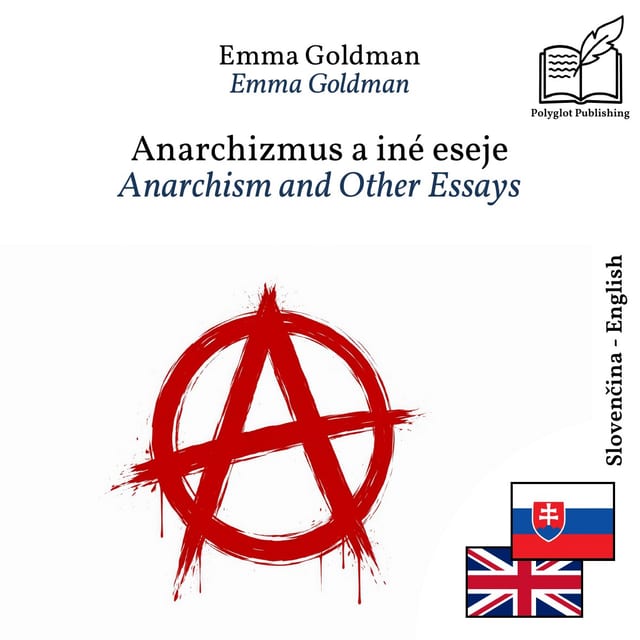
Anarkism och andra essäer
Emma Goldman
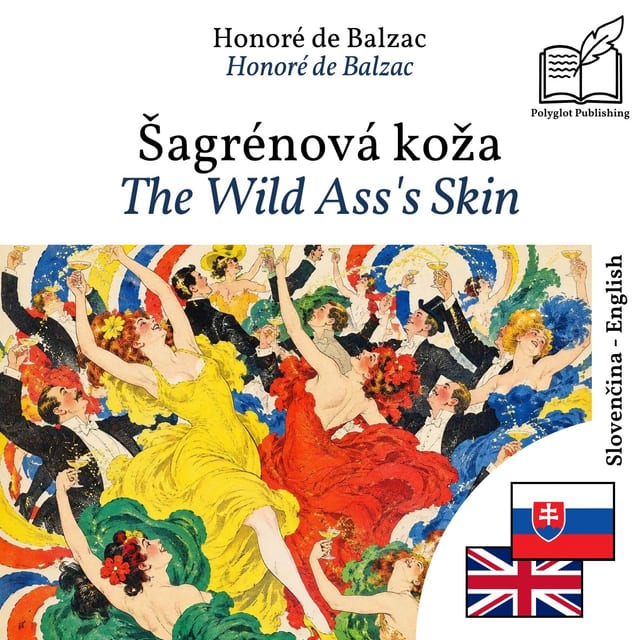
Chagrängskinnet
Honoré de Balzac
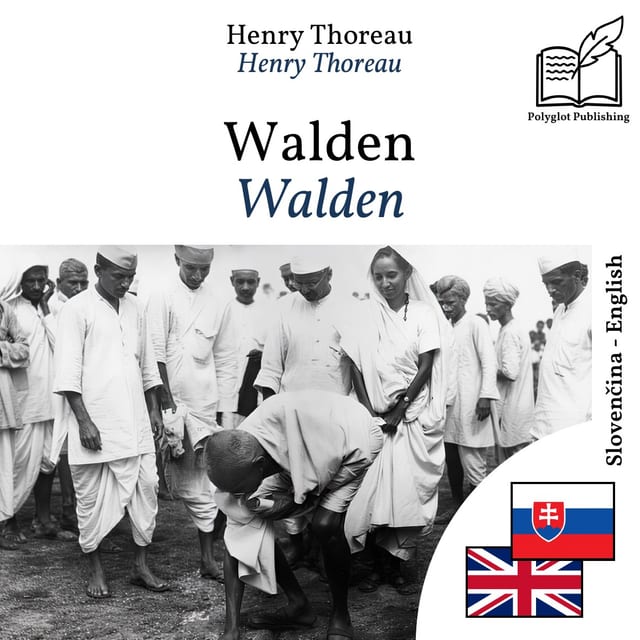
Walden
Henry Thoreau
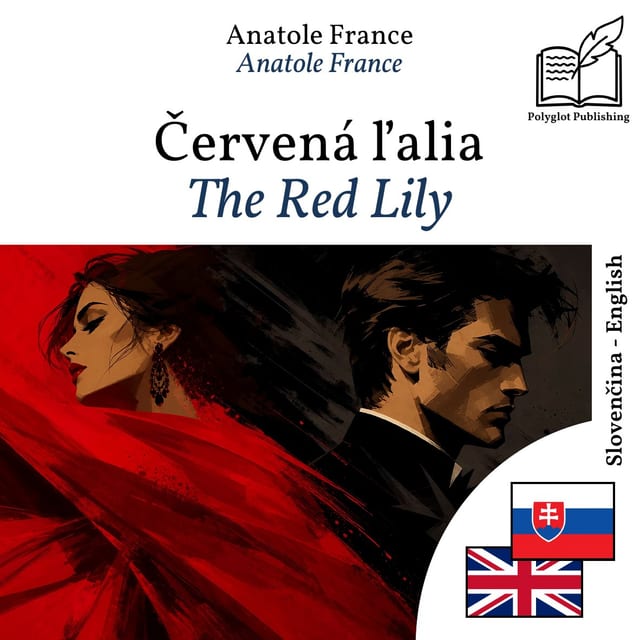
Den röda liljan
Anatole France
Frankenstein
Mary Shelley
Utforska webbplatsen
Andra språk du kan lära dig
- engelska
- franska
- spanska
- tyska
- italienska
- ryska
- arabiska
- bulgariska
- bengali
- katalanska
- tjeckiska
- danska
- grekiska
- esperanto
- estniska
- persiska
- finska
- hebreiska
- hindi
- kroatiska
- ungerska
- indonesiska
- japanska
- kazakiska
- koreanska
- litauiska
- lettiska
- nederländska
- norska
- polska
- portugisiska
- brasiliansk portugisiska
- rumänska
- serbiska (latinska)
- serbiska (kyrilliska)
- slovakiska
- slovenska
- swahili
- turkiska
- ukrainska
- vietnamesiska
- kinesiska
- kinesiska (Taiwan)