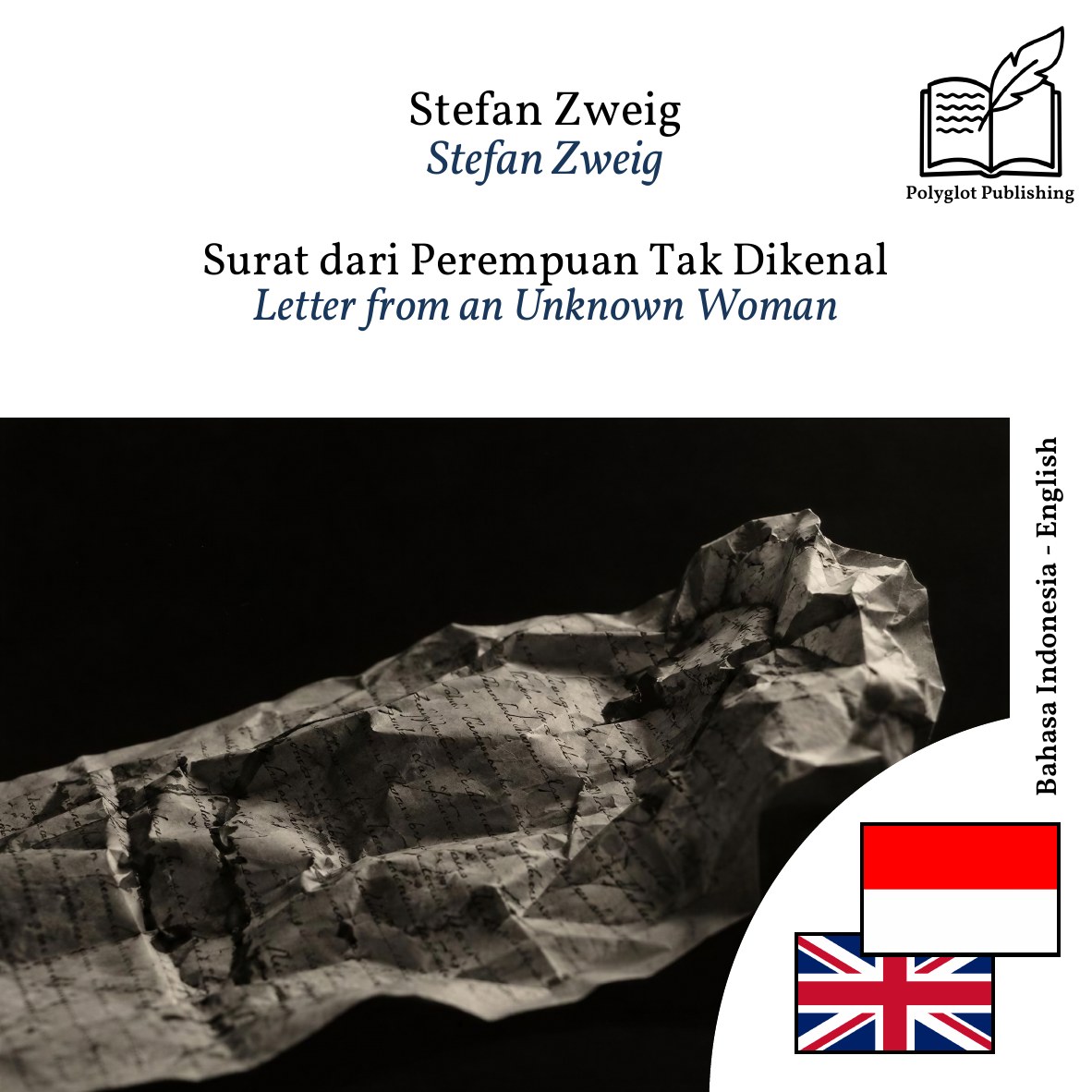
Στέφαν Τσβάιχ
Γράμμα μιας άγνωστης
Έντυπο βιβλίο: 17,99 €
Ψηφιακό: 5,99 €
- Πρώτη έκδοση
- 1922
- Σελίδες
- 97
- Δυσκολία
- ★★☆
- Είδη
- Ρομαντισμός, Ψυχολογία
- Μεταφράστηκε από
- Γερμανικά
Περίληψη του βιβλίου
Απόσπασμα
Κάθε απόσπασμα στη γλώσσα που μαθαίνετε, με τη μετάφρασή του ακριβώς από κάτω.
Ketika novelis ternama R. pulang ke Wina pada pagi buta seusai tamasya tiga hari yang menyegarkan ke pegunungan dan membeli koran di stasiun, begitu matanya menyapu tanggal, ia teringat bahwa hari ini adalah hari ulang tahunnya. Yang keempat puluh satu, pikirnya cepat, dan kenyataan itu tidak membuatnya senang maupun sedih. Sekilas ia membalik-balik halaman koran yang gemeresik lalu naik mobil sewaan ke rumahnya. Pelayannya melaporkan dua kunjungan dan beberapa panggilan telepon selama ia pergi, lalu membawakan surat-surat yang telah menumpuk di atas sebuah baki. Dengan acuh tak acuh ia memeriksa kiriman itu, merobek beberapa amplop yang pengirimnya menarik minatnya; sepucuk surat bertulisan tangan asing yang tampak terlalu tebal ia sisihkan dulu. Sementara itu teh telah dihidangkan; ia bersandar dengan nyaman di kursi berlengan, sekali lagi membalik-balik koran dan beberapa barang cetakan; kemudian ia menyalakan cerutu dan kini meraih surat yang tadi disisihkan.
When the well-known novelist R. returned to Vienna early one morning from a refreshing three-day excursion into the mountains and bought a newspaper at the station, he had barely glanced at the date before he was reminded that today was his birthday. His forty-first, he quickly reflected, and the realisation neither pleased nor pained him. He leafed hastily through the crackling pages of the newspaper and took a hired motor car to his flat. The manservant reported two visitors and several telephone calls during his absence and brought him the accumulated post on a tray. He looked idly through the letters and tore open a few envelopes whose senders interested him; one letter, addressed in an unfamiliar hand and seemingly too bulky, he pushed aside for the time being. Meanwhile tea had been served; he leaned back comfortably in his armchair, leafed once more through the newspaper and some printed matter; then he lit a cigar and at last reached for the letter he had set aside.
Isinya sekitar dua lusin halaman yang ditulis tergesa-gesa dengan tulisan tangan perempuan yang asing dan gelisah, lebih mirip naskah daripada surat. Tanpa sadar ia meraba amplop itu sekali lagi, kalau-kalau ada surat pengantar yang tertinggal di dalamnya. Tetapi amplop itu kosong, dan seperti lembaran-lembaran itu sendiri, tidak mencantumkan alamat pengirim ataupun tanda tangan. Aneh, pikirnya, lalu mengambil kembali tulisan itu. “Untukmu, yang tak pernah mengenalku”, tertulis di bagian atas sebagai sapaan, sebagai judul. Dengan heran ia terhenti: apakah itu ditujukan kepadanya, atau kepada seseorang yang hanya ada dalam mimpi? Rasa ingin tahunya mendadak terjaga. Dan ia mulai membaca:
It consisted of some two dozen hastily written pages in an unfamiliar, restless woman’s hand, a manuscript rather than a letter. Involuntarily he felt the envelope once more, in case a covering note had been left inside. But the envelope was empty and, like the pages themselves, bore neither a sender’s address nor a signature. Strange, he thought, and took up the letter again. “To you, who never knew me” stood at the top, as a salutation, as a heading. He paused in astonishment: was this meant for him, or for some imagined person? His curiosity was suddenly aroused. And he began to read:
*
*
Anakku meninggal kemarin – tiga hari tiga malam aku bergulat dengan maut demi nyawa kecil yang rapuh ini, empat puluh jam aku duduk di sisi ranjangnya, sementara influenza mengguncang tubuhnya yang malang dan panas dalam demam. Aku menaruh kompres sejuk di dahinya yang membara, aku menggenggam tangan-tangan kecilnya yang gelisah siang dan malam. Pada malam ketiga aku ambruk. Mataku tak kuat lagi; tanpa kusadari, mataku terpejam. Tiga atau empat jam aku tertidur di kursi yang keras, dan sementara itu maut merenggutnya. Kini ia terbaring di sana, anak lelaki yang manis dan malang itu, di ranjang kanak-kanaknya yang sempit, persis seperti saat ia meninggal; hanya matanya yang telah dipejamkan orang, matanya yang cerdas dan gelap, kedua tangannya telah dilipat di atas kemejanya yang putih, dan empat batang lilin menyala tinggi di keempat sudut ranjang. Aku tak berani memandang, aku tak berani bergerak, sebab bila lilin-lilin itu berkelip, bayang-bayang melintas di wajahnya dan di mulutnya yang terkatup, dan saat itu seolah-olah raut wajahnya bergerak, dan aku bisa saja mengira ia tidak mati, bahwa ia akan terbangun lagi dan dengan suaranya yang jernih mengucapkan sesuatu yang lembut dan kekanak-kanakan kepadaku. Tetapi aku tahu, ia sudah mati, aku tak mau memandang lagi, agar tidak berharap sekali lagi, agar tidak kecewa sekali lagi. Aku tahu, aku tahu, anakku meninggal kemarin – kini aku hanya punya engkau di dunia ini, hanya engkau, yang tak tahu apa-apa tentang diriku, yang sementara itu bermain-main tanpa curiga atau bersenda gurau dengan benda-benda dan orang-orang. Hanya engkau, yang tak pernah mengenalku dan yang selalu kucintai.
My child died yesterday – for three days and three nights I wrestled with death for this small, tender life; for forty hours I sat at his bedside while influenza shook his poor, burning body with fever. I laid cool cloths on his glowing forehead, I held his restless little hands day and night. On the third evening I collapsed. My eyes could do no more; they closed without my knowing it. For three or four hours I slept on the hard chair, and in the meantime death took him. Now he lies there, my sweet, poor boy, in his narrow little bed, just as he died; they have only closed his eyes, his clever, dark eyes, and folded his hands over his white shirt, and four candles burn tall at the four corners of the bed. I dare not look, I dare not stir, for when the candles flicker, shadows flit across his face and his closed mouth, and then it is as though his features moved, and I could almost believe that he is not dead, that he will wake again and say something tender and childlike to me in his clear voice. But I know it, he is dead; I will not look any more, so as not to hope once again, not to be disappointed once again. I know it, I know it, my child died yesterday – now I have only you left in the world, only you, who know nothing of me, who meanwhile are playing, unsuspecting, or trifling with things and people. Only you, who never knew me and whom I have always loved.
Η πλοκή

Ο κόσμος του βιβλίου

Ο συγγραφέας

Τα πλεονεκτήματα της δίγλωσσης μεθόδου με την προβολή Συγχρονισμός γραμμή προς γραμμή
Κάθε σειρά του πρωτοτύπου έχει τη μετάφρασή της ακριβώς από κάτω, στο ίδιο ύψος. Δεν χάνετε ποτέ τη θέση σας: το μάτι κατεβαίνει μια σειρά και βρίσκει ακριβώς τη φράση που μόλις διάβασε. Είναι η διάταξη που σας επιτρέπει να ανοίξετε ένα βιβλίο σε γλώσσα που δεν κατέχετε καλά χωρίς να το εγκαταλείψετε, και να συγκρίνετε τα δύο κείμενα σχεδόν λέξη προς λέξη.
Παρόμοια βιβλία
Εικοσιτέσσερις ώρες από τη ζωή μιας γυναίκας
Στέφαν Τσβάιχ
Αμόκ
Στέφαν Τσβάιχ

Ανεμοδαρμένα Ύψη
Έμιλι Μπροντέ

Μία γυναίκα
Άλφρεντ Όλιβαντ

Η Μαντόνα με το γούνινο παλτό
Σαμπαχατίν Αλί

Μεγάλες προσδοκίες
Τσαρλς Ντίκενς

Τζέιν Έιρ
Σαρλότ Μπροντέ
Σκακιστική νουβέλα
Στέφαν Τσβάιχ

Ο λόφος του τράγου
Άλις Ράις

Αν Βερόνικα
Χ. Τζ. Ουέλς
Σκληρός σαν τον τάφο
Ε. Σάουθγουορθ

Φόβος
Στέφαν Τσβάιχ
Η παρακμή ενός ανθρώπου
Οσάμου Νταζάι
Έγκλημα και Τιμωρία
Φιοντόρ Ντοστογιέφσκι

Ερωτικές επιστολές στον Ίμλεϊ
Μέρι Γουόλστονκραφτ

Κάρμεν
Προσπέρ Μεριμέ
Εξερευνήστε τον ιστότοπο
Άλλες γλώσσες που μπορείτε να μάθετε
- Αγγλικά
- Γαλλικά
- Ισπανικά
- Γερμανικά
- Ιταλικά
- Ρωσικά
- Αραβικά
- Βουλγαρικά
- Βεγγαλικά
- Καταλανικά
- Τσεχικά
- Δανικά
- Εσπεράντο
- Εσθονικά
- Περσικά
- Φινλανδικά
- Εβραϊκά
- Χίντι
- Κροατικά
- Ουγγρικά
- Ινδονησιακά
- Ιαπωνικά
- Καζακικά
- Κορεατικά
- Λιθουανικά
- Λετονικά
- Ολλανδικά
- Νορβηγικά
- Πολωνικά
- Πορτογαλικά
- Πορτογαλικά Βραζιλίας
- Ρουμανικά
- Σερβικά (Λατινικό)
- Σερβικά (Κυριλλικό)
- Σλοβακικά
- Σλοβενικά
- Σουηδικά
- Σουαχίλι
- Τουρκικά
- Ουκρανικά
- Βιετναμικά
- Κινεζικά
- Κινεζικά (Ταϊβάν)