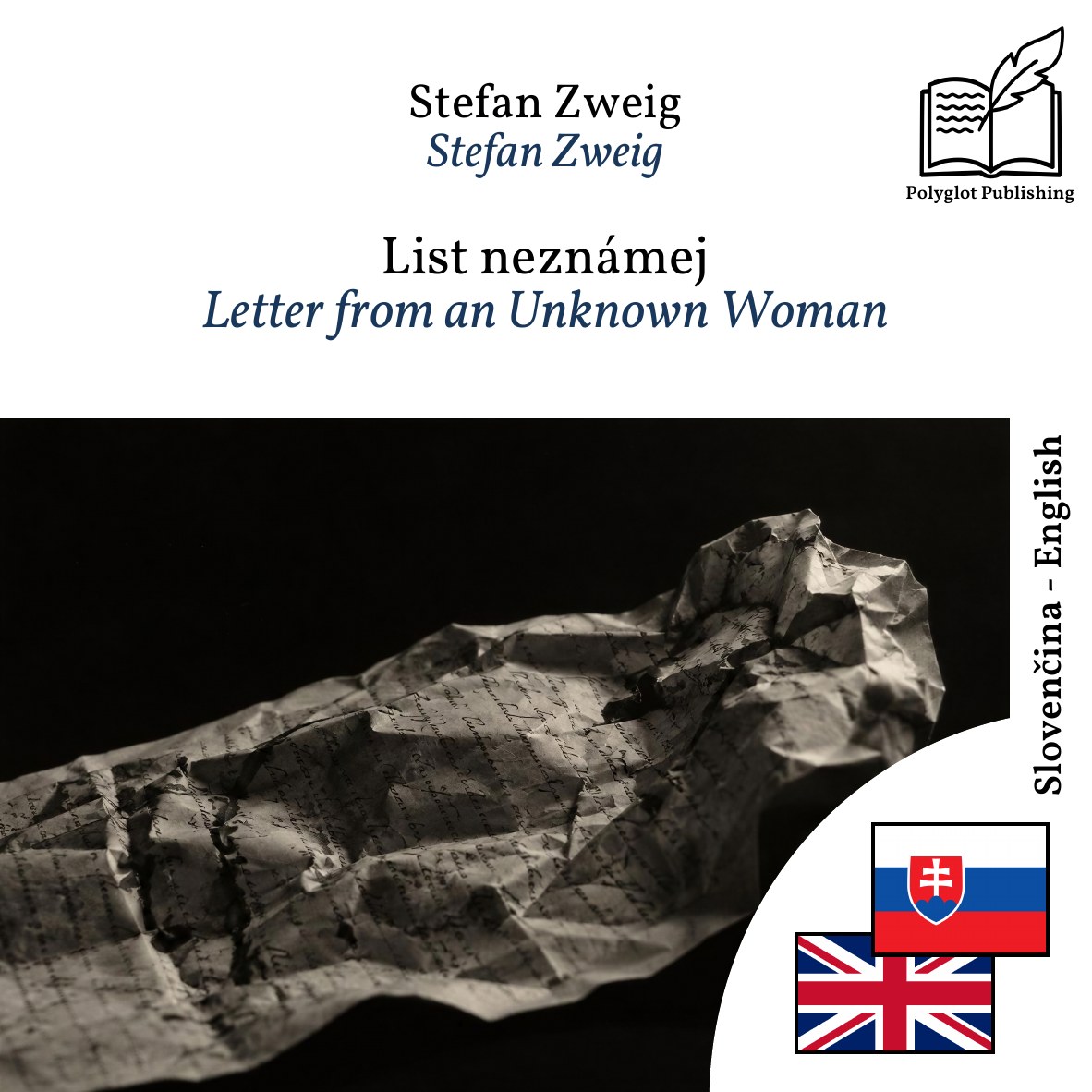
Stefan Zweig
Brev fra en ukjent kvinne
Trykt bok: 17,99 €
Digital: 5,99 €
- Originalutgave
- 1922
- Sider
- 97
- Vanskelighetsgrad
- ★★☆
- Sjangre
- Kjærlighetsroman, Psykologi
- Oversatt fra
- tysk
Sammendrag av boken
Utdrag
Hvert avsnitt på språket du lærer, med oversettelsen rett under.
Keď sa známy autor románov R. skoro ráno vrátil z trojdňového osviežujúceho výletu do hôr späť do Viedne a na stanici si kúpil noviny, len čo prebehol očami dátum, spomenul si, že dnes má narodeniny. Štyridsiate prvé, uvedomil si rýchlo, a toto zistenie ho ani nepotešilo, ani nezabolelo. Letmo prelistoval šuštiace stránky novín a taxíkom odišiel do svojho bytu. Sluha mu oznámil, že počas jeho neprítomnosti prišli dve návštevy a niekoľkokrát telefonovali, a priniesol mu na podnose nahromadenú poštu. Ľahostajne si prezrel, čo prišlo, a roztrhol niekoľko obálok, ktorých odosielatelia ho zaujali; list s cudzím rukopisom, ktorý sa mu zdal príliš rozsiahly, zatiaľ odsunul nabok. Medzitým mu podali čaj; pohodlne sa oprel v kresle, ešte raz prelistoval noviny a niekoľko tlačovín, potom si zapálil cigaru a siahol napokon po odloženom liste.
When the well-known novelist R. returned to Vienna early one morning from a refreshing three-day excursion into the mountains and bought a newspaper at the station, he had barely glanced at the date before he was reminded that today was his birthday. His forty-first, he quickly reflected, and the realisation neither pleased nor pained him. He leafed hastily through the crackling pages of the newspaper and took a hired motor car to his flat. The manservant reported two visitors and several telephone calls during his absence and brought him the accumulated post on a tray. He looked idly through the letters and tore open a few envelopes whose senders interested him; one letter, addressed in an unfamiliar hand and seemingly too bulky, he pushed aside for the time being. Meanwhile tea had been served; he leaned back comfortably in his armchair, leafed once more through the newspaper and some printed matter; then he lit a cigar and at last reached for the letter he had set aside.
Boli to asi dva tucty narýchlo popísaných strán, cudzím, nepokojným ženským písmom, skôr rukopis ako list. Mimovoľne ešte raz ohmatal obálku, či v nej nezostal zabudnutý nejaký sprievodný list. No obálka bola prázdna a rovnako ako samotné hárky nemala ani adresu odosielateľa, ani podpis. Zvláštne, pomyslel si a znova vzal písanie do ruky. „Tebe, ktorý si ma nikdy nepoznal“, stálo hore ako oslovenie, ako nadpis. Prekvapene sa zarazil: patrilo to jemu, alebo nejakému vysnívanému človeku? Jeho zvedavosť sa náhle prebudila. A začal čítať:
It consisted of some two dozen hastily written pages in an unfamiliar, restless woman’s hand, a manuscript rather than a letter. Involuntarily he felt the envelope once more, in case a covering note had been left inside. But the envelope was empty and, like the pages themselves, bore neither a sender’s address nor a signature. Strange, he thought, and took up the letter again. “To you, who never knew me” stood at the top, as a salutation, as a heading. He paused in astonishment: was this meant for him, or for some imagined person? His curiosity was suddenly aroused. And he began to read:
*
*
Moje dieťa včera zomrelo – tri dni a tri noci som zápasila so smrťou o tento malý, krehký život, štyridsať hodín som presedela pri jeho posteli, kým mu chrípka triasla horúčkou úbohým rozpáleným telíčkom. Kládla som mu na horúce čielko niečo chladné, deň a noc som držala jeho nepokojné rúčky. Na tretí večer som sa zrútila. Oči už nevládali, zatvorili sa bez toho, aby som o tom vedela. Tri hodiny alebo štyri som prespala na tvrdej stoličke, a medzitým si ho vzala smrť. Teraz tam leží, môj milý, úbohý chlapček, vo svojej úzkej detskej postieľke, presne taký, ako zomrel; len oči mu zatvorili, jeho múdre tmavé oči, ruky mu zložili na bielej košieľke a štyri sviece horia vysoko na štyroch rohoch postele. Neodvážim sa ta pozrieť, neodvážim sa pohnúť, lebo keď zablikajú, tie sviece, prebehnú mu po tvári a zovretých ústach tiene, a vtedy je to, akoby sa mu hýbali črty, a mohla by som si myslieť, že nie je mŕtvy, že sa znova prebudí a svojím jasným hlasom mi povie niečo detsky nežné. Ale ja viem, je mŕtvy, nechcem sa už pozerať, aby som znova nedúfala, aby som nebola znova sklamaná. Viem to, viem to, moje dieťa včera zomrelo – teraz mám na svete už len Teba, len Teba, ktorý o mne nič nevieš, ktorý sa medzitým nič netušiac hráš alebo sa zabávaš s vecami a ľuďmi. Len Teba, ktorý si ma nikdy nepoznal a ktorého som vždy milovala.
My child died yesterday – for three days and three nights I wrestled with death for this small, tender life; for forty hours I sat at his bedside while influenza shook his poor, burning body with fever. I laid cool cloths on his glowing forehead, I held his restless little hands day and night. On the third evening I collapsed. My eyes could do no more; they closed without my knowing it. For three or four hours I slept on the hard chair, and in the meantime death took him. Now he lies there, my sweet, poor boy, in his narrow little bed, just as he died; they have only closed his eyes, his clever, dark eyes, and folded his hands over his white shirt, and four candles burn tall at the four corners of the bed. I dare not look, I dare not stir, for when the candles flicker, shadows flit across his face and his closed mouth, and then it is as though his features moved, and I could almost believe that he is not dead, that he will wake again and say something tender and childlike to me in his clear voice. But I know it, he is dead; I will not look any more, so as not to hope once again, not to be disappointed once again. I know it, I know it, my child died yesterday – now I have only you left in the world, only you, who know nothing of me, who meanwhile are playing, unsuspecting, or trifling with things and people. Only you, who never knew me and whom I have always loved.
Handlingen

Bokens univers

Forfatteren

Fordelene med den tospråklige metoden med visningen Linje for linje synkronisert
Hver linje i originalen har oversettelsen rett under seg, på samme høyde. Du leter aldri etter hvor du er: blikket flytter seg ett hakk ned og finner nøyaktig den setningen du nettopp leste. Dette er oppsettet som gjør det mulig å gå i gang med en bok på et språk du knapt kan, uten å falle av, og å sammenligne de to tekstene nesten ord for ord.
Lignende bøker
Tjuefire timer av en kvinnes liv
Stefan Zweig
Amok
Stefan Zweig
Stormfulle høyder
Emily Brontë
En kvinne
Alfred Ollivant

Madonna i pels
Sabahattin Ali
Store forventninger
Charles Dickens
Jane Eyre
Charlotte Brontë
Sjakknovelle
Stefan Zweig

Bukkeåsen
Alice Rice
Ann Veronica
H. G. Wells
Grusom som graven
E. D. E. N. Southworth
Angst
Stefan Zweig
Et menneskes forfall
Osamu Dazai
Forbrytelse og straff
Fjodor Dostojevskij
Kjærlighetsbrev til Imlay
Mary Wollstonecraft
Carmen
Prosper Mérimée
Utforsk nettstedet
Andre språk du kan lære
- engelsk
- fransk
- spansk
- tysk
- italiensk
- russisk
- arabisk
- bulgarsk
- bengali
- katalansk
- tsjekkisk
- dansk
- gresk
- esperanto
- estisk
- persisk
- finsk
- hebraisk
- hindi
- kroatisk
- ungarsk
- indonesisk
- japansk
- kasakhisk
- koreansk
- litauisk
- latvisk
- nederlandsk
- polsk
- portugisisk
- portugisisk (Brasil)
- rumensk
- serbisk (latinsk)
- serbisk (kyrillisk)
- slovakisk
- slovensk
- svensk
- swahili
- tyrkisk
- ukrainsk
- vietnamesisk
- kinesisk
- kinesisk (Taiwan)