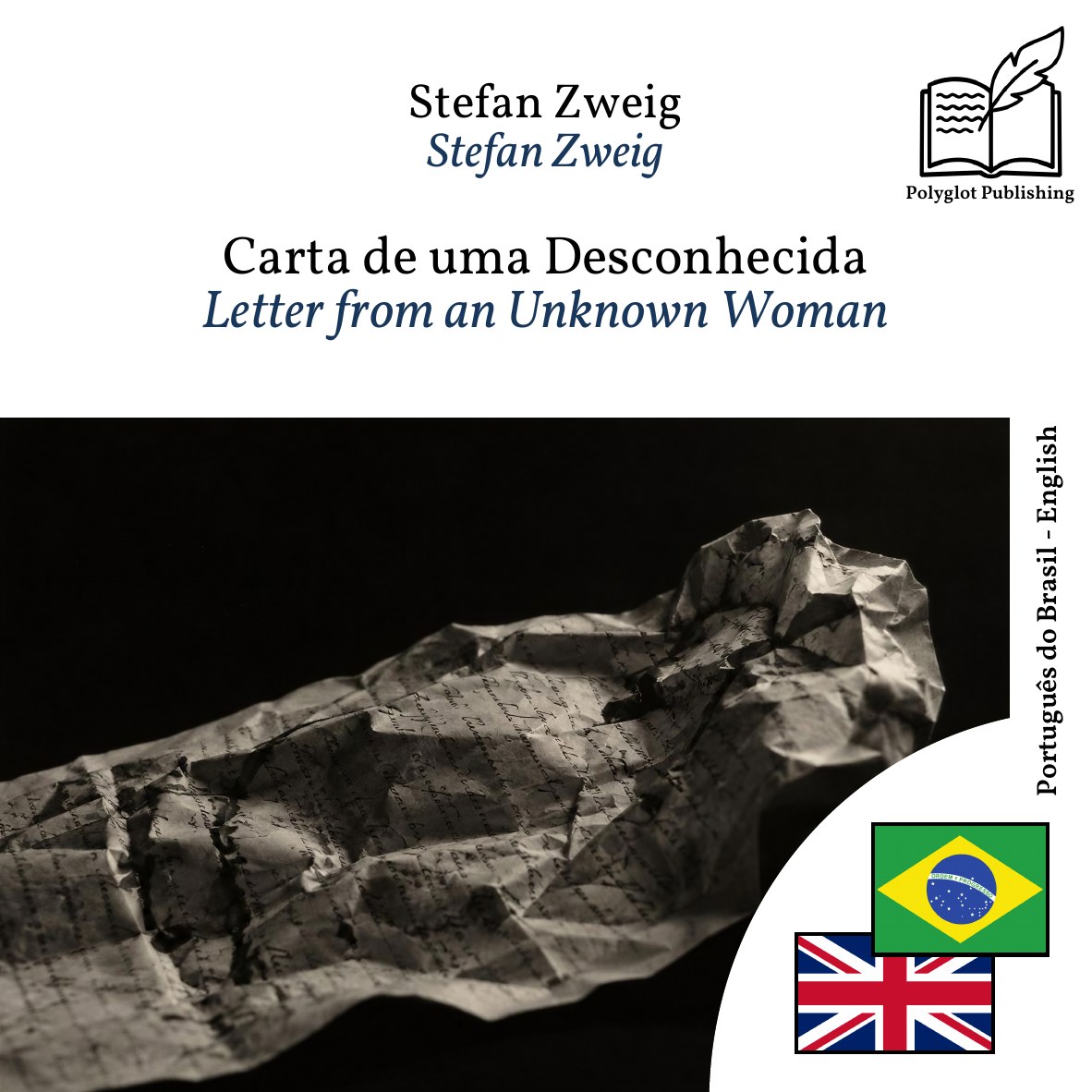
Stefan Zweig
List neznámej
Tlačená kniha: 17,99 €
Digitálne: 5,99 €
- Pôvodné vydanie
- 1922
- Strán
- 97
- Náročnosť
- ★★☆
- Žánre
- Romantika, Psychológia
- Preložené z
- nemčina
Zhrnutie knihy
Ukážka
Každá pasáž v jazyku, ktorý sa učíte, s prekladom hneď pod ňou.
Quando o conhecido romancista R., bem cedo pela manhã, voltou a Viena depois de uma revigorante excursão de três dias pelas montanhas e comprou um jornal na estação, percebeu, mal passou os olhos pela data, que aquele era o dia do seu aniversário. Quarenta e um, lembrou-se rapidamente, e essa constatação não lhe fez bem nem mal. Folheou às pressas as páginas farfalhantes do jornal e foi de táxi para o seu apartamento. O criado relatou duas visitas e alguns telefonemas recebidos durante sua ausência e trouxe numa bandeja a correspondência acumulada. Ele examinou com displicência o que tinha chegado e abriu alguns envelopes cujos remetentes o interessavam; uma carta com uma letra desconhecida, que lhe pareceu volumosa demais, ele deixou de lado por enquanto. Nesse meio-tempo, o chá tinha sido servido; ele se recostou confortavelmente na poltrona, folheou mais uma vez o jornal e alguns impressos; depois acendeu um charuto e pegou então a carta que tinha deixado de lado.
When the well-known novelist R. returned to Vienna early one morning from a refreshing three-day excursion into the mountains and bought a newspaper at the station, he had barely glanced at the date before he was reminded that today was his birthday. His forty-first, he quickly reflected, and the realisation neither pleased nor pained him. He leafed hastily through the crackling pages of the newspaper and took a hired motor car to his flat. The manservant reported two visitors and several telephone calls during his absence and brought him the accumulated post on a tray. He looked idly through the letters and tore open a few envelopes whose senders interested him; one letter, addressed in an unfamiliar hand and seemingly too bulky, he pushed aside for the time being. Meanwhile tea had been served; he leaned back comfortably in his armchair, leafed once more through the newspaper and some printed matter; then he lit a cigar and at last reached for the letter he had set aside.
Eram umas duas dúzias de páginas escritas às pressas, numa letra feminina desconhecida e agitada, mais um manuscrito do que uma carta. Sem querer, ele apalpou mais uma vez o envelope, para ver se não tinha ficado esquecido ali dentro algum bilhete. Mas o envelope estava vazio e, assim como as próprias folhas, não trazia nem endereço do remetente nem assinatura. Estranho, pensou, e pegou de novo o escrito. “A você, que nunca me conheceu”, estava escrito no alto, como uma invocação, como um título. Espantado, ele parou: aquilo era para ele, ou para alguém sonhado? Sua curiosidade despertou de repente. E ele começou a ler:
It consisted of some two dozen hastily written pages in an unfamiliar, restless woman’s hand, a manuscript rather than a letter. Involuntarily he felt the envelope once more, in case a covering note had been left inside. But the envelope was empty and, like the pages themselves, bore neither a sender’s address nor a signature. Strange, he thought, and took up the letter again. “To you, who never knew me” stood at the top, as a salutation, as a heading. He paused in astonishment: was this meant for him, or for some imagined person? His curiosity was suddenly aroused. And he began to read:
*
*
Meu filho morreu ontem — durante três dias e três noites lutei com a morte por essa pequena e frágil vida, durante quarenta horas fiquei sentada à beira da cama dele, enquanto a gripe sacudia de febre seu pobre corpinho ardente. Refresquei sua testa em brasa, segurei dia e noite suas mãozinhas inquietas. Na terceira noite, desabei. Meus olhos não aguentavam mais, fecharam-se sem que eu percebesse. Dormi três horas, ou quatro, na cadeira dura, e enquanto isso a morte o levou. Agora ele está ali, meu menino querido, meu pobre menino, em sua caminha estreita de criança, exatamente como morreu; só fecharam seus olhos, seus olhos escuros e inteligentes, cruzaram suas mãos sobre a camisa branca, e quatro velas ardem altas nos quatro cantos da cama. Não ouso olhar, não ouso me mexer, porque, quando elas tremulam, as velas, sombras deslizam sobre o rosto dele e a boca fechada, e então é como se suas feições se mexessem, e eu poderia achar que ele não está morto, que vai acordar de novo e me dizer, com sua voz clara, alguma coisa de uma ternura infantil. Mas eu sei, ele está morto, não quero mais olhar, para não ter esperança outra vez, para não me decepcionar outra vez. Eu sei, eu sei, meu filho morreu ontem — agora só tenho você no mundo, só você, que não sabe nada de mim, que enquanto isso brinca sem desconfiar de nada ou se diverte levianamente com coisas e pessoas. Só você, que nunca me conheceu e que eu sempre amei.
My child died yesterday – for three days and three nights I wrestled with death for this small, tender life; for forty hours I sat at his bedside while influenza shook his poor, burning body with fever. I laid cool cloths on his glowing forehead, I held his restless little hands day and night. On the third evening I collapsed. My eyes could do no more; they closed without my knowing it. For three or four hours I slept on the hard chair, and in the meantime death took him. Now he lies there, my sweet, poor boy, in his narrow little bed, just as he died; they have only closed his eyes, his clever, dark eyes, and folded his hands over his white shirt, and four candles burn tall at the four corners of the bed. I dare not look, I dare not stir, for when the candles flicker, shadows flit across his face and his closed mouth, and then it is as though his features moved, and I could almost believe that he is not dead, that he will wake again and say something tender and childlike to me in his clear voice. But I know it, he is dead; I will not look any more, so as not to hope once again, not to be disappointed once again. I know it, I know it, my child died yesterday – now I have only you left in the world, only you, who know nothing of me, who meanwhile are playing, unsuspecting, or trifling with things and people. Only you, who never knew me and whom I have always loved.
Dej

Svet knihy

Autor

Výhody dvojjazyčnej metódy pri zobrazení Synchronizované riadok po riadku
Každý riadok originálu má preklad priamo pod sebou, v rovnakej výške. Nikdy nehľadáte, kde ste sa zastavili: oko sa posunie o jeden riadok nižšie a nájde presne tú vetu, ktorú práve prečítalo. Je to úprava, ktorá vám dovolí pustiť sa do knihy v jazyku, ktorý ovládate slabo, bez toho, aby ste stratili niť, a porovnávať oba texty takmer slovo za slovom.
Podobné knihy
Dvadsaťštyri hodín zo života ženy
Stefan Zweig
Amok
Stefan Zweig
Búrlivé výšiny
Emily Brontë
Jedna žena
Alfred Ollivant
Madona v kožuchu
Sabahattin Ali

Veľké nádeje
Charles Dickens
Jana Eyrová
Charlotte Brontë
Šachová novela
Stefan Zweig

Capí vŕšok
Alice Rice
Ann Veronica
H. G. Wells
Krutá ako hrob
E. Southworth
Strach
Stefan Zweig
Zlyhanie človeka
Osamu Dazai
Zločin a trest
Fiodor Dostojevskij

Ľúbostné listy Imlayovi
Mary Wollstonecraft
Carmen
Prosper Mérimée
Preskúmať web
Ďalšie jazyky, ktoré sa môžete učiť
- angličtina
- francúzština
- španielčina
- nemčina
- taliančina
- ruština
- arabčina
- bulharčina
- bengálčina
- katalánčina
- čeština
- dánčina
- gréčtina
- esperanto
- estónčina
- perzština
- fínčina
- hebrejčina
- hindčina
- chorvátčina
- maďarčina
- indonézština
- japončina
- kazaština
- kórejčina
- litovčina
- lotyština
- holandčina
- nórčina
- poľština
- portugalčina
- portugalčina (brazílska)
- rumunčina
- srbčina (latinka)
- srbčina (cyrilika)
- slovinčina
- švédčina
- swahilčina
- turečtina
- ukrajinčina
- vietnamčina
- čínština
- čínština (Taiwan)